
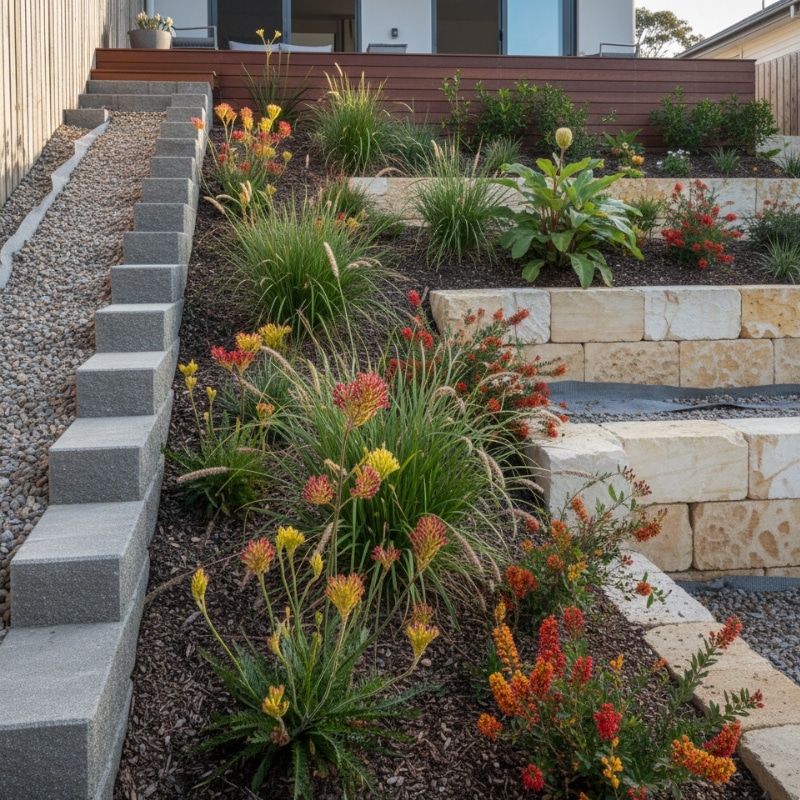
If you’ve got a sloped yard in Sydney, choosing between sleepers and block systems for retaining walls isn’t just an aesthetic decision. Soil type, drainage, rainfall intensity, access, and long-term maintenance all play a bigger role than most homeowners realise. Get these wrong, and even a well-built structure can lean, crack, or fail after heavy rain.
This guide breaks down sleeper and block systems in plain terms, with a Sydney-specific lens. You’ll learn how each performs in local soil conditions, what drainage is non-negotiable, and how material choice connects to long-term cost — without turning this into a sales pitch.
Why Sydney’s conditions change the decision
Sydney’s landscape creates a unique mix of challenges:
- Clay-heavy soils that expand when wet and shrink when dry
- Intense rainfall events that dump large volumes of water quickly
- Sloping blocks carved into sandstone, fill, or reactive clay
- Backyards where walls often sit close to fences, neighbours, or driveways
These factors mean lateral pressure and water management matter more than the visible face of the wall. Many failures blamed on “bad materials” are actually drainage failures underneath or behind the structure.
What people usually mean by “sleepers” and “blocks”
Before comparing performance, it helps to clarify the systems.
Sleeper-based systems (post and panel)
Sleeper systems typically use:
- Concrete or timber sleepers stacked horizontally
- Steel H-posts or C-posts set into the ground
- Backfill and drainage were installed behind the panels
They form a straight, modular structure where the sleepers carry the load between posts.
Block-based systems (masonry or segmental)
Block systems usually involve:
- Interlocking concrete blocks or masonry units
- A continuous concrete footing
- Either mortar-set or dry-stacked construction
- Integrated drainage via weep holes or rear aggregate zones
Blocks rely on mass, footing width, and interlock rather than vertical posts.
How Sydney soil affects each system
Clay soil behaviour
Much of Sydney sits on reactive clay. When saturated, clay expands and increases pressure; when dry, it contracts and settles.
- Sleeper systems rely on post embedment to resist this movement
- Block systems rely on footing stability and wall mass
In reactive clay, poor drainage amplifies movement. Without a proper drainage path, water sits behind the structure and pushes outward regardless of material.
Cut vs fill ground
- Cut ground (excavated natural soil) generally offers better stability
- The fill ground is less predictable and often poorly compacted
Sleeper systems can perform well on cut ground with correct post depth. On fill ground, both systems usually need deeper foundations and more robust drainage to avoid settlement.
Drainage: the deciding factor most people ignore
If there’s one takeaway from this guide, it’s this: drainage matters more than sleepers vs blocks.
Water trapped behind any garden wall increases hydrostatic pressure dramatically. In Sydney’s heavy rain, that pressure builds fast.
According to guidance from the NSW Planning Portal on earthworks, retaining walls and structural supports, effective drainage behind soil-retaining structures is critical to long-term performance and safety.
Non-negotiable drainage elements
Regardless of the system, good designs usually include:
- Free-draining aggregate directly behind the wall
- Geotextile fabric separating soil from drainage material
- Agricultural pipe (ag pipe) at the base, graded to an outlet
- A clear exit point so water can actually leave the system
Skipping any of these increases the risk of bulging, leaning, or sudden failure.
For homeowners wanting a deeper overview of what compliant drainage should involve, this guide on retaining wall options for Sydney sloping blocks explains how material choice and drainage work together in real-world sites.
Sleeper systems: strengths and limitations in Sydney
Where sleepers perform well
Sleeper systems tend to suit:
- Straight runs along boundaries
- Sites with tight access
- Projects needing faster installation
- Modern, clean-lined garden designs
Concrete sleepers, in particular, handle moisture far better than timber and are common in Sydney builds.
Common failure points
Problems usually occur when:
- Posts aren’t embedded deep enough for the soil conditions
- Drainage is undersized or omitted
- Sleepers are used beyond recommended height limits
- Additional loads (fences, sheds, driveways) aren’t accounted for
These issues are often invisible at installation but show up after the first few heavy rain seasons.
Maintenance considerations
- Concrete sleepers require minimal maintenance
- Timber sleepers may rot over time, especially in damp soil
- Steel posts should be galvanised to resist corrosion
Block systems: strengths and limitations in Sydney
Where block systems excel
Block systems are often preferred when:
- Curves or stepped designs are needed
- The wall height increases gradually
- Visual texture and landscaping integration matter
- The site allows for excavation and footing construction
Their mass and interlocking design can distribute pressure effectively when built correctly.
Common failure points
Block walls tend to fail when:
- Footings are too shallow or narrow
- Drainage paths become blocked over time
- Weep holes discharge onto flat areas without a fall
- The wall is built on uncontrolled fill
Block walls aren’t immune to water pressure — without drainage, they can crack or shear just as easily as sleeper systems.
Maintenance considerations
- Mortar-set walls may need crack monitoring
- Dry-stacked systems rely on intact interlocks
- Drain outlets must remain clear over time
Sleeper vs block: performance in heavy rain
Sydney’s intense rain events are the real test.
- Sleeper systems depend heavily on post stability and drainage relief
- Block systems depend on footing integrity and water escape paths
In both cases, most movement after storms traces back to water not leaving the system fast enough.
If you’re researching broader design approaches or want to learn more about retaining wall construction principles used in Sydney landscapes, understanding how water behaves on your specific slope is essential before choosing materials.
Cost thinking: why material price is only part of the story
Homeowners often compare sleeper and block prices per square metre, but that rarely reflects the final cost.
Cost drivers that matter more than material
- Excavation difficulty
- Access for machinery
- Soil removal and disposal
- Drainage materials and outlets
- Engineering or approvals (where required)
A cheaper material on a difficult site can cost more overall than a premium material on an accessible site.
Typical cost patterns (conceptual, not quotes)
- Sleeper systems often have lower labour time on simple sites
- Block systems may cost more upfront, but suit complex layouts
- Drainage upgrades can add noticeable cost — and are worth it
Material choice should follow site constraints, not the other way around.
Sleeper vs block for common Sydney scenarios
Boundary fence on a slope
- Sleepers often integrate well with fencing
- Extra care is needed for surcharge loads from the fence
Backyard entertaining terrace
- Block systems allow curved seating and planting zones
- Visual integration with paving is easier
Narrow side access
- Sleeper systems typically suit restricted access better
- Smaller machinery and faster installation
Properties below neighbours
- Drainage design becomes critical
- Both systems may need professional input
For a broader breakdown of material suitability, this resource compares retaining wall materials for Sydney homes, and explores how sleepers and blocks behave across different property types.
When professional advice becomes important
While this guide is informational, certain conditions justify specialist input:
- Taller structures or stepped height changes
- Driveways, pools, or sheds above the wall
- Walls close to property boundaries
- Evidence of unstable fill or previous movement
- Poor drainage leads to the street or stormwater
Early advice often prevents costly rework later.
Frequently asked questions
Are concrete sleepers better than blocks in Sydney?
Neither is universally “better.” Performance depends on soil, drainage, height, and loading. Concrete sleepers suit straight, accessible builds; blocks suit curves and complex layouts.
Which system lasts longer?
Both can last decades if drainage is done correctly. Most early failures are drainage-related, not material-related.
Does one handle clay soil better?
Both handle clay soil well when drainage relieves pressure. Without drainage, both struggle.
Is one cheaper to maintain?
Concrete sleepers generally require less maintenance. Block walls require periodic inspection of joints, outlets, and surface movement.
Can I mix sleepers and blocks?
Yes, in stepped or terraced designs — but transitions need careful detailing to manage load paths and drainage.
The bottom line for Sydney homeowners
Sleeper vs block isn’t a simple pros-and-cons checklist. In Sydney, success comes down to matching the system to your soil, slope, and drainage realities.
Choose the system that works with your site — and prioritise water management above everything else. Do that, and both sleepers and blocks can perform reliably for years to come.

