
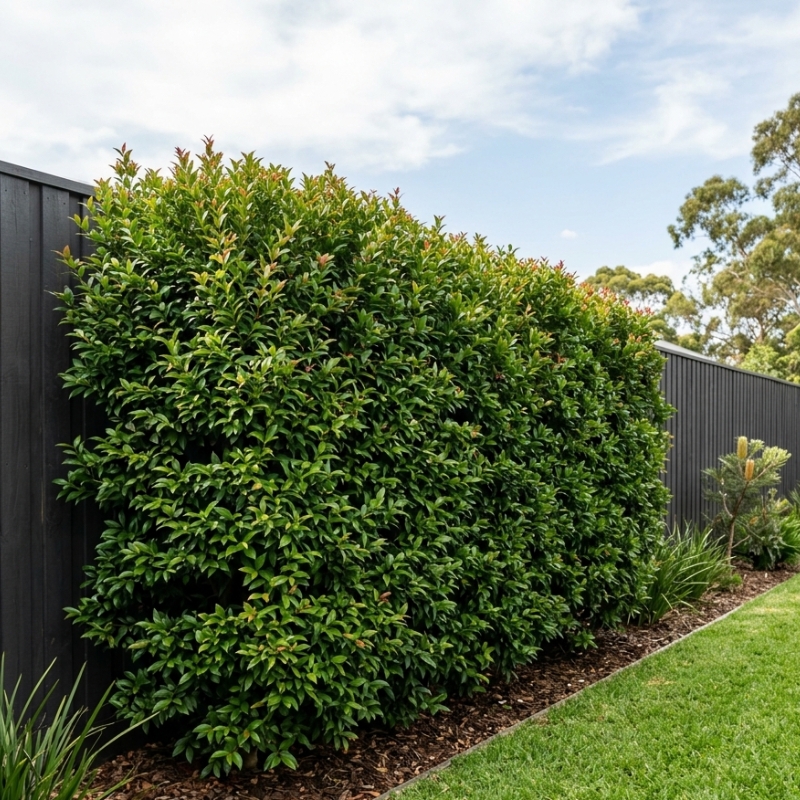
A well-chosen hedge is one of the best ways to add privacy, block a view or soften a fence line, and the right plant can fill in surprisingly quickly. If you want a green screen without waiting years for it, this guide covers the best fast-growing hedge plants for Sydney gardens, how far apart to plant them, and the upkeep a fast grower needs to stay neat. Choosing the right hedge is also part of a wider garden and landscape design, so it pays to think about where the screen sits in the garden as a whole.
What makes a good privacy hedge in Sydney
A good screening hedge does a few things well. It grows at a decent pace so you get privacy within a reasonable time. It holds dense foliage from the ground up rather than going leggy and bare at the base. It stays evergreen so the screen does not thin out over winter. And it copes with Sydney conditions, which means humidity, warm summers, the occasional heavy storm and a mix of clay and sandy soils across different suburbs.
Fast growth is a double-edged thing. A hedge that races up to give you privacy will also keep growing after it gets there, so the quicker growers need more regular trimming to stay in shape. That is worth knowing before you plant, because the upkeep is part of the deal.
Best fast-growing hedge plants for Sydney gardens
So which plants actually do the job? These are the fast-growing hedges we see most across Sydney, with a note on speed, size, spacing, sun and how often each one wants a cut. One quick check before you plant anything vigorous: make sure it isn’t a declared weed in your area, which you can look up on the NSW Government’s WeedWise database.
Lilly Pilly (Syzygium and Acmena varieties)
Lilly pilly is the go-to screening plant across Sydney. It is fast, dense, evergreen and takes trimming well, and many varieties push out attractive new growth in shades of red and bronze. The one thing to watch is psyllid, a small insect that puckers the leaves of some older varieties. Newer psyllid-resistant selections and the Acmena types are far less bothered by it, so choose one of those for a clean screen. Depending on the variety, lilly pilly can screen anywhere from around two metres up to a tall boundary hedge, so match the variety to the height you actually want.
Murraya (Murraya paniculata)
Murraya, sometimes called orange jessamine, is a favourite Sydney hedge for good reason. It is fast, grows dense, clips into a tidy formal shape and produces fragrant white flowers through the warmer months. It suits full sun to part shade and makes an excellent low to medium screen. Give it a trim after each flush of flowers to keep it compact.
Photinia (Red Robin)
Photinia Red Robin is fast and gives a burst of bright red new growth that stands out against the older green leaves. It makes a striking screen and responds well to shaping. Because it grows quickly and the colour comes from fresh growth, it does want regular trimming to stay dense and keep pushing new red foliage. It prefers a sunny spot with room for air movement.
Viburnum and Pittosporum options
For a reliable evergreen screen, sweet viburnum (Viburnum odoratissimum) is a strong performer in Sydney, with large glossy leaves and quick, dense growth that makes a solid privacy wall. Pittosporum varieties such as Silver Sheen offer a lighter, finer look with small leaves on dark stems, which suits a more modern garden. Both clip well and hold their shape between trims.
How far apart to plant a hedge
Spacing depends on the plant and how quickly you want the screen to close over. As a general rule, space plants at roughly half to two-thirds of their mature width so they knit together into a solid hedge without crowding.
In practice, that usually means something like 50 to 80 centimetres apart for a low to medium screen such as murraya or a compact lilly pilly, and a little wider for larger growers like sweet viburnum. Planting closer gets you a dense screen faster but uses more plants, while planting wider is cheaper and takes longer to fill in. Check the mature width on the plant label and space to suit, rather than guessing.
How to keep a fast-growing hedge in shape
A fast-growing hedge needs regular trimming, and that is the honest trade-off for quick privacy. Left alone, quick growers get tall and open at the base, which is the opposite of what you want from a screen. Trimming little and often keeps the hedge dense, holds it at the height you want and encourages fresh growth right down to the ground.
Most fast-growing hedges want trimming a few times through the growing season, with the busiest period over the warmer months. Technique matters as much as timing, and different plants respond to different cuts, so it is worth reading up on the right way to shape different hedges before you start. If the hedge is tall, long or you would rather not keep on top of it yourself, professional hedge trimming keeps the screen neat and healthy without the ladder work.
Frequently asked questions
What is the fastest growing hedge in Australia? Murraya, lilly pilly, photinia and sweet viburnum are all among the faster-growing screening plants for Sydney gardens. The fastest for your yard depends on the height you want and your conditions, since a plant that suits full sun may struggle in shade.
How often should I trim a hedge? A fast-growing hedge usually wants trimming a few times across the growing season to stay dense and in shape. Slower growers need less. Trimming little and often gives a better result than one hard cut a year.
Which hedge is best for privacy in Sydney? Lilly pilly and sweet viburnum are popular for a tall, dense privacy screen, while murraya suits a lower or more formal hedge. Choose a psyllid-resistant lilly pilly variety if that is the look you want.
How far apart should I plant hedge plants? Space plants at roughly half to two-thirds of their mature width, often around 50 to 80 centimetres for a low to medium hedge. Planting closer fills the screen faster but needs more plants.
Once your hedge is established, keep it neat and healthy with regular trimming. See A1’s professional hedge trimming service or get in touch to book a visit.

