


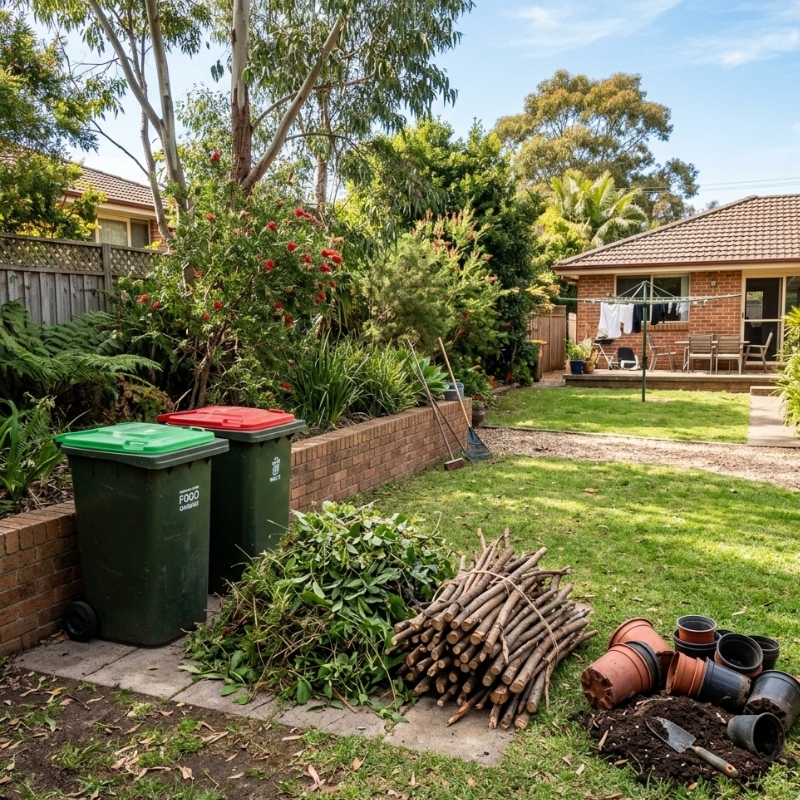
Sydney’s bin system looks simple until you’re standing over a half-full wheelie bin with a handful of “maybe” items after a big clean-up or rubbish removal job: a dead pot plant, a bag of weeds, a broken plastic pot, some dirt swept off pavers, and a few takeaway containers from the gardening run.
The difference between the green-lid bin (garden organics) and general waste isn’t just about being “tidy” or “eco”. Sorting it correctly helps keep loads usable (so organics can be processed into compost or mulch), reduces contamination, and can save you the annoyance of a rejected bin or extra clean-up work.
This guide is built for Sydney households and small property managers who want clear, practical rules, plus what to do when you’ve got more garden waste than your green bin can handle.
First, check what “green bin” means where you live
Across Greater Sydney, bin rules can vary by council and by property type (houses vs units). Some areas have:
• a green-lid garden organics bin (plants and garden clippings only), while others may also have
• a food organics and garden organics system (FOGO), where food scraps can go in a dedicated organics service.
If you’re in the City of Sydney area, their guidance is a helpful baseline for what typically belongs in a garden organics service and what doesn’t. You can use it as a reference point while still checking your specific council’s instructions: City of Sydney garden organics guidance.
The simple rule: “natural garden material” vs “everything else”
If you remember one thing, make it this:
• The green bin is for natural garden material that can break down cleanly in an organic process.
• The red bin (general waste) is for everything else that can’t be composted, is contaminated, or is made of mixed materials.
Where people go wrong is assuming “it came from the garden” automatically means “green bin”. Soil, treated timber, plastics, and garden hardware are common examples that don’t belong in garden organics.
What goes in the green bin in Sydney (garden organics)
In most Sydney councils with a green-lid garden organics service, these are safe “yes” items:
• Grass clippings
• Leaves and flowers
• Weeds (shaken free of excess soil)
• Small branches and twigs (cut down to size, within council limits)
• Hedge trimmings
• Bark, small offcuts from untreated garden pruning
• Small amounts of loose plant matter from pot plants (with soil removed)
Green bin “best practice” tips that prevent problems
• Keep the lid closed (overflow can lead to spills, pests, and missed collection).
• Don’t hide contamination in the middle (it still ruins the load).
• Shake or knock off soil where you can.
• Avoid plastic bags unless your council explicitly permits compostable liners (rules vary).
• Break down bulky clippings so the bin can be emptied cleanly.
Q&A: Can I put weeds in the green bin?
Yes, in most cases. The practical issue is soil and seeds:
• Shake off soil as much as possible.
• If you’re dealing with seeding weeds, bagging may be tempting, but plastic bags usually don’t belong in organics. Check your council’s preference.
• If the weeds are heavily caked in soil, treat them as a “tricky item” (see the decision guide below).
What belongs in the general waste (red bin)
General waste is the “safe default” for anything that’s not accepted in organics, including:
• Plastic plant pots and trays
• Polystyrene packaging (common in plant deliveries)
• Broken hoses, irrigation tubing, fittings, tap timers
• Garden gloves, knee pads, tarps, weed mat (synthetic)
• Treated or painted timber offcuts
• Vacuum dust, sweeping from garages and workshops
• Pet waste (for most councils, not organics)
• Anything mixed with food residue, chemicals, oils, or paint
The red bin is also where things go when you can’t confidently confirm an item is accepted in organics.
Q&A: If it’s “compostable packaging”, can it go in the green bin?
Not automatically. “Compostable” claims on packaging don’t always match what local processing facilities can accept, and councils can be strict because contamination is a major problem. If your council doesn’t explicitly say it’s allowed, keep it out of organics.
The most common “gotcha” items Sydneysiders get wrong
This is where bins are most likely to be contaminated.
Soil, dirt, sand and potting mix
Even though it’s “from the garden”, soil and potting mix can cause processing problems and add weight quickly. It’s also often mixed with stones, plastic, or other debris.
What to do instead:
• Keep soil separate in a sturdy container.
• Reuse it where practical (top-ups, levelling, garden beds) if it’s clean.
• For larger quantities, plan a proper disposal route rather than trying to sneak it into bins.
If your clean-up includes soil, turf, and mixed landscaping leftovers, it’s a good moment to think about rubbish and land removal solutions as a next step, once you’ve sorted the recyclable and organic material.
Tree stumps, logs, and oversized branches
Councils often limit branch thickness/length and usually don’t want heavy logs or stumps in kerbside organics.
What to do instead:
• Cut down branches to permitted sizes if you can do so safely.
• Keep stumps/logs separate and organise an alternative disposal pathway.
Plastic pots, tags, and nursery trays
These are organic contamination classics. Even a small amount can ruin a full organic load because plastic fragments are hard to remove once shredded.
What to do instead:
• Empty soil into a separate soil pile.
• Put plastic pots and tags into the appropriate recycling stream if accepted (rules vary), otherwise general waste.
Weed mat, landscape fabric, and synthetic edging
Even when these look “earthy”, they’re usually plastic-based and not suitable for organics.
What to do instead:
• Roll and bundle for general waste or a larger disposal load.
Treated timber, sleepers, painted or stained wood
These are not garden organics. Treated timber can contain chemicals and shouldn’t go into compost streams.
What to do instead:
• Keep it out of the green bin.
• Dispose of timber and construction debris.
What happens if you put the wrong thing in the bin?
Consequences vary by council and by how contaminated the load is, but these are common outcomes.
1) Your bin can be rejected
If collectors spot contamination, a bin can be left behind with a sticker or tag explaining why it wasn’t serviced. That means you may need to:
• remove the contamination
• re-present the bin correctly next collection day, or
• arrange another solution if the volume is too big
Practical impact: you’re stuck storing the waste longer, and the smell/pests can become an issue if it’s mixed.
2) The whole truckload can be compromised
Even if your bin is collected, contamination can cause loads to be downgraded or diverted, which reduces the chance that organics become usable compost/mulch. This is one of the reasons councils emphasise correct sorting.
3) You may face extra steps, and sometimes extra costs
Some councils or waste services can require additional sorting actions or charge for special collections in certain circumstances. It’s not the most common household outcome, but the inconvenience is real.
Q&A: Do you get fined for putting things in the wrong bin?
Fines aren’t the everyday result for most households making an honest mistake. The more common “penalty” is rejection (your bin isn’t emptied) or the requirement to fix the contamination. That said, illegal dumping is a separate issue and can carry serious penalties, so it’s worth keeping all waste disposal above board.
A quick decision guide for tricky items
When you’re unsure, run through this checklist:
Step 1: Is it 100% natural plant material?
• If yes, it’s usually green bin (garden organics), within size limits.
• If no, go to Step 2.
Step 2: Is it soil, sand, rocks, rubble, or mixed with dirt?
• If yes, keep it out of the green bin.
• If no, go to Step 3.
Step 3: Is it plastic, rubber, fabric, treated timber, or metal?
• If yes, it’s not a green bin.
• If no, go to Step 4.
Step 4: Is it “compostable” packaging or a liner?
• If your council explicitly says it’s accepted, follow that guidance.
• If not clearly accepted, keep it out of organics.
How to avoid contamination during a weekend garden tidy-up
A little set-up before you start pruning and pulling can prevent 90% of bin confusion.
Create three piles as you work
• Clean plant clippings (green bin)
• “Hard stuff” (plastics, edging, hardware, treated timber)
• Dirt-heavy material (soil, roots with heavy soil, rubble)
This makes it much easier to keep the green bin clean, especially when you’re tired at the end of the day.
Keep a “no guessing” tub near the bin
Use a bucket or crate for items you’re uncertain about (broken pot fragments, root balls, weed mat offcuts). Decide at the end once you’ve checked the rules.
Bundle and cut down clippings early
Oversized branches and long palm fronds are the classic lid-won’t-close problem. Cut and compress as you go.
Q&A: What if I have more garden waste than fits in my green bin?
You’ve got a few options:
• Spread the job across multiple weeks (if the waste won’t rot/attract pests).
• Reduce volume by cutting down and compacting plant material.
• Use council clean-up services if available in your area.
• If it’s a big tidy-up (storm debris, hedge removal, a full backyard reset), it can be simpler to get help with a larger clean-up once you’ve separated organics from mixed waste.
The green bin isn’t a “garden everything” bin: common scenarios
Scenario 1: You repotted plants and swept up potting mix
What you have:
• loose potting mix
• plastic pot fragments
• plant roots and old mulch
Sort like this:
• Plant roots and old mulch (shake off excess soil) → green bin
• Plastic pot fragments → general waste (or recycling if accepted)
• Loose potting mix → keep separate (not green bin)
Scenario 2: You removed a small garden bed edge
What you have:
• plastic edging or treated timber
• mixed soil and roots
• weeds and plant clippings
Sort like this:
• Weeds/clippings (soil shaken off) → green bin
• Edging/timber → not green bin
• Mixed soil and roots → keep separate; avoid “hiding” it in organics
Scenario 3: You pressure-cleaned pavers and collected sludge
That sludge is typically a mix of dirt, sand, organic matter, and sometimes detergent residue.
• Keep it out of organics.
• Let it dry and dispose via appropriate channels (general waste in small amounts, or a larger disposal route if substantial).
Scenario 4: You’ve done a major prune, and the street is covered in branches
If the branches are too thick/long for kerbside limits or your bin won’t close:
• Stack and cut down what you can safely.
• Keep the oversized material separate.
• Consider a one-off solution for overflow rather than forcing it into kerbside bins.
If you’ve finished sorting and you’re left with an awkward mix of branches, bagged clippings, and non-organics, managing garden waste after a big tidy-up can be a sensible next step to keep everything compliant and out of the “guessing game”.
How to teach the household (or tenants) without becoming the bin police
Bin contamination often isn’t stubbornness; it’s uncertainty. A simple system helps.
• Put a short “yes list” on the inside of a laundry door: grass, leaves, small clippings.
• Put a “no list” near the green bin: soil, plastic pots, treated timber, logs/stumps.
• Keep a small tub labelled “unsure” to decide later.
• For rentals: include a one-page bin guide in the welcome pack.
Q&A: What’s the biggest single cause of organics contamination?
Plastics (plant pots, bags, packaging) and soil-heavy garden waste are top contenders because they’re easy to accidentally include and hard to remove once the organics stream is processed.
Final FAQ: Green bin vs general waste in Sydney
Can I put food scraps in the green bin in Sydney?
It depends on your council’s organics system. Some areas run FOGO services; others have garden organics only. If your council doesn’t clearly say food is accepted, don’t add it to the green bin.
Can I put soil, dirt, or potting mix in the green bin?
Generally, no. Keep soil out of the green bin and find a more suitable disposal or reuse option.
Can I put palm fronds in the green bin?
Often yes if they’re cut down and fit within size limits, but long, rigid fronds can jam bins and prevent proper emptying. Cut them down and keep the lid closed.
What happens if my bin is contaminated?
Commonly, it may be rejected (not collected), or it may still be collected but contaminate the organics stream. If it’s rejected, you’ll usually need to remove the wrong items before the next collection.
Are plastic plant pots recyclable?
Sometimes, depending on local recycling rules and the type of plastic. If unsure, keep them out of recycling and out of the green bin.
Can I put treated timber in the green bin if it’s “just a small piece”?
No. Treated/painted/stained timber doesn’t belong in organics.
What should I do with mixed waste after a landscaping project?
Keep organics clean and separate, then plan a disposal route for soil, rubble, timber, and plastics. For larger mixed loads, a dedicated removal solution is often the most practical way to stay compliant and avoid kerbside issues.
