


Sydney lawns cop a lot: hot spells, sudden downpours, humid runs, shaded courtyards, salty coastal breezes, and plenty of foot traffic from kids, pets, and weekend gatherings — which is why smart gardening practices matter. When a lawn starts looking thin, weedy, or “tired”, it’s tempting to throw fertiliser at it and hope for the best.
A better approach is to diagnose first.
In most backyards, patchiness, weeds, and compaction are connected. Compacted soil sheds water and starves roots. Stressed grass thins out. Weeds move into the gaps. Then the lawn looks worse, so you mow lower… and it spirals.
This guide walks you through what to look for, quick checks you can do in minutes, and practical fixes that suit Sydney’s conditions.
Start Here: The 5-Minute Lawn Diagnosis
Before you buy anything or do a big weekend blitz, do these quick checks.
1) Where are the bad patches?
- Along paths, clotheslines, play areas, gates = traffic wear + compaction
• Under trees, next to tall fences = shade stress + root competition
• Low spots or near downpipes = drainage + waterlogging
• Random circles or spreading patches = disease or pests
• The same strip every summer = heat + reflected sun + shallow watering
2) What colour is the grass doing “wrong”?
- Pale overall = low nitrogen, poor uptake, or mowing stress
• Yellow patches = water issues, compaction, urine burn, or disease
• Brown patches with a defined edge = fungus/disease patterns (often humidity-related)
• Straw-brown after mowing = scalped too low, or blunt mower blade, tearing leaves
3) How hard is the soil?
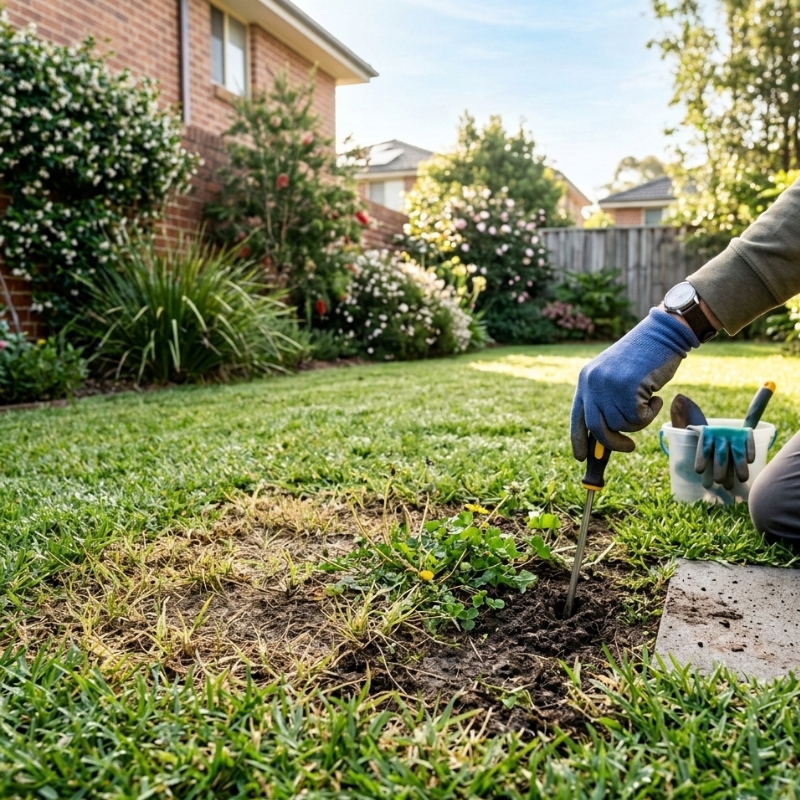
Try the screwdriver test: push a long screwdriver into the soil after a normal watering day.
- Goes in easily = soil likely OK
• Stops quickly or takes real force = compaction is likely a major factor
Compaction is widely flagged as a common, overlooked cause of thinning and bare patches because it blocks air, water, and nutrients from reaching roots.
4) Are weeds winning because the lawn is weak?
Weeds rarely “cause” a lawn to fail on their own. They usually move in because:
- grass is thin
• soil is hard or patchy
• watering is inconsistent
• mowing habits favour weeds (too short, too infrequent)
5) Is watering helping… or harming?
In Sydney, it’s important to water within the local rules and in a way that encourages deeper roots. Sydney Water’s Water Wise Guidelines set the baseline for permitted water use across Sydney, the Blue Mountains and the Illawarra.
If you’re watering a little bit often, you might be creating shallow roots and stress, especially in warm weather.
A quick Q&A
How do I know what to fix first?
If the soil is hard and water runs off, fix compaction and watering habits first. If the lawn is thin, weeds will keep returning until the grass can outcompete them.
Patchy Lawn in Sydney: What It Usually Means (And How To Confirm)
Patchiness is a symptom. The goal is to figure out which “bucket” your patches fit into.
Bucket 1: Traffic + compaction patches
Common signs
• bare spots in walkways, near the gate, around the Hills Hoist, trampoline, or dog run
• soil feels like concrete when dry
• water pools on top or runs away to the side
Confirm it
• screwdriver test fails
• footprints linger after walking across the lawn
• you can see a smooth, sealed surface on the soil when the grass is thin
What to do
• aerate (core aeration is best for truly hard ground)
• topdress lightly after aeration to improve soil structure
• redirect traffic with stepping stones or a simple path for repeat wear zones
• Raise mowing height slightly so the grass has more leaf area to recover
What not to do
• don’t keep scalping low to “make it thicker” — it usually makes it thinner
• don’t rely on fertiliser alone if roots can’t access it
Bucket 2: Shade patches (trees, fences, buildings)
Common signs
• thinning under the same shaded area year-round
• grass leans towards light
• Moss can appear in damp shade zones
Confirm it
• look at the sun pattern over a full day (not just at noon)
• if you get fewer than ~4 hours of direct sun in peak growing months, many warm-season grasses struggle
What to do
• lift mowing height in shade (more leaf = more photosynthesis)
• reduce competition (remove leaf litter, improve airflow)
• consider thinning tree canopy where appropriate
• in deep shade, pivot the area away from “lawn expectations” and into groundcovers or a mulched zone
Bucket 3: Watering pattern patches (sprinklers, hand watering, hydrophobic soil)
Common signs
• green circles near a sprinkler head but dry patches between
• dry, crusty spots that “won’t wet”
• patchiness that shows up quickly in warm weather
Confirm it
• do a jar/tin test: place a few containers around the lawn during a sprinkler run to see if coverage is even
• if water beads and runs off, soil may be water-repellent (hydrophobic), common in sandy or organic-rich top layers
What to do
• water less often but more deeply (within local rules)
• fix sprinkler coverage (direction, pressure, blocked heads)
• Wetting agents can help hydrophobic spots, but only if you also improve watering practice
Bucket 4: Pests or disease patches
Common signs
• patches that spread
• odd patterns (rings, circles)
• turf lifts easily like a loose mat (often root damage)
• increased bird activity pecking at the lawn can hint at grubs
Confirm it
• inspect at dusk/dawn for chewing insects
• peel back a small section and check for grubs in the top few cm of soil
• look for fungal patterning during humid stretches (brown spots with darker edges, for example)
If you suspect pests or fungal disease and it’s spreading fast, that’s a good moment to pause the “random fixes” and get the diagnosis right.
A quick Q&A
Can I just patch-seed the bare spots?
You can, but patching without fixing the cause often fails. If compaction, shade, or watering issues remain, new grass struggles in the same spot.
Weeds in Sydney Lawns: Why They Take Over (And How To Stop the Repeat Cycle)
Weeds are opportunists. Many guides focus on “how to kill weeds,” but the longer-term win is “how to make weeds unnecessary.”
Yates highlights weeds as one of the most common lawn problems and notes how difficult they can be to eliminate completely once established.
The three reasons weeds keep coming back
- The grass is too thin
- The soil is stressed (hard, wet, or nutrient-poor)
- Mowing habits are helping weeds seed and spread
Common Sydney patterns to watch
• Winter weeds appear as the weather cools (often faster than warm-season grass can compete)
• Weeds clustering in damp areas with poor drainage
• Weed “strips” that follow sprinkler overspray or runoff channels
What to do: a practical weed plan that doesn’t wreck the lawn
Step 1: Improve competition (the “boring” part that works)
• mow a little higher
• mow more regularly during active growth
• address compaction if present
• correct watering coverage
Step 2: Remove existing weeds sensibly
• Hand removal works well for isolated weeds (especially before they seed)
• Targeted treatment is more lawn-friendly than blanket spraying, especially in stressed turf
Step 3: Close the gaps
• topdress thin areas
• patch repair small bare spots once the underlying issue is addressed
A quick Q&A
Should I fertilise to outgrow weeds?
Only if the lawn can use it. If the soil is compacted or watering is inconsistent, fertiliser can boost weeds just as easily as grass.
Compaction: The Hidden Problem Behind Patchiness and Weeds
If you only fix one thing this season, make it compaction.
Compaction happens when soil particles are pressed together — from traffic, heavy rain impact, clay structure, or repeated mowing equipment. Lawn Solutions Australia notes compaction can reduce air, water, and nutrient movement and often leads to thinning or bare patches.
Signs your lawn is compacted
• water pools on the surface
• runoff flows to the edges instead of soaking in
• grass feels spongy on top but hard underneath (thatch + compacted base)
• Roots are short and shallow when you dig a small plug
• the lawn looks worse after the heat because roots can’t chase moisture deeper
What actually helps
• Core aeration (removes plugs) is most effective for hard ground
• Spiking (pushing holes) can help slightly, but in dense clay, it may just compress the sides of the hole
• Topdressing after aeration helps keep channels open and improves structure over time
• Reducing traffic in repeat wear zones prevents the problem from returning immediately
When to aerate in Sydney
A simple rule: aerate when your grass is actively growing so it can recover. For many Sydney lawns, that’s typically in the warmer growing months, but it depends on your grass type and microclimate (coastal vs cooler pockets).
A quick Q&A
How often should I aerate?
If you have a busy backyard and clay soil, yearly aeration is common. If your lawn is low-traffic and drains well, you may only need it occasionally.
The Sydney Reality Check: Watering Habits That Make Lawns Worse
A lot of lawn frustration comes from well-intentioned watering.
Sydney Water’s Water Wise Guidelines exist to help maintain supply and prepare for tighter restrictions when needed, and they apply broadly across Sydney, the Blue Mountains and Illawarra.
Two watering mistakes that create patchiness
• “Little and often” watering (shallow roots + heat stress)
• Watering at the wrong time for conditions (high evaporation or prolonged leaf wetness)
A simple watering upgrade
• Check coverage first (containers around the lawn)
• Water deeply enough to reach the root zone
• Allow the surface to dry between waters, so roots seek moisture deeper
• Adjust for shade: shaded areas need less water, not more
If you want a baseline for what’s permitted and sensible locally, follow the official guidance in Sydney Water’s Water Wise Guidelines.
The “Two-Week Reset” Plan for a Patchy, Weedy, Hard Lawn
If your lawn has all three problems at once, this approach is usually more effective than trying ten fixes in one day.
Days 1–2: Diagnose and stop the damage
• Raise mowing height (even slightly helps)
• Sharpen/replace mower blades if they tear grass
• Do the screwdriver test and container watering test
• Identify if patches match shade, traffic, drainage, or random spread
Days 3–7: Fix the foundations
• Aerate if compaction is confirmed
• Improve watering coverage and spacing (don’t chase “green daily”)
• Spot-remove weeds (hand removal or targeted approach)
Days 8–14: Support recovery
• Light topdressing in thin areas (especially after aeration)
• Patch repair small bare spots if the cause is addressed
• Continue mowing high and regularly during growth
For ongoing habits that keep things stable through Sydney’s seasonal swings, see these outdoor maintenance tips.
When It’s Worth Getting Another Set of Eyes On It
DIY works well when the problem is small and the cause is clear. It’s worth getting help when:
• patchiness is spreading quickly (possible disease)
• drainage issues keep returning (waterlogging, runoff, soggy low spots)
• The soil is extremely compacted across most of the lawn
• weeds rebound immediately after removal (thin turf + underlying stress)
• You’ve tried a few sensible changes for a month and nothing shifts
If you’re in that zone, it can be useful to talk to a local gardening team to diagnose what’s actually driving the issue in your specific yard.
Prevention: Keep Sydney Lawns Resilient (Without Living on a Mower)
Prevention isn’t fancy — it’s consistency.
Mowing habits that reduce patchiness and weeds
• Don’t scalp: leave more leaf to power roots
• Mow more often during strong growth (less stress per cut)
• Keep blades sharp to avoid shredding grass tips
Soil habits that reduce compaction
• Aerate on a schedule if you have clay + traffic
• Topdress lightly to improve structure over time
• Create a clear traffic line (even stepping stones) for repeat routes
Watering habits that reduce stress
• Fix coverage first, then adjust frequency
• Avoid creating permanently damp zones
• Adapt to microclimates (shady corners, hot reflective edges, windy coastal areas)
All of this adds up to one goal: keeping your yard healthy so the grass can outcompete weeds and tolerate Sydney’s extremes.
FAQ: Lawn Problems in Sydney
Why is my lawn patchy even though I water it?
Often, watering is uneven (coverage gaps), too frequent and shallow (roots stay near the surface), or the soil is compacted so water can’t soak in properly.
How can I tell if my lawn is compacted?
If a screwdriver won’t push in easily after normal watering, water pools or runs off, and the lawn thins in high-traffic areas, compaction is very likely.
What’s the fastest way to improve a hard lawn?
Core aeration plus improved watering habits usually gives the quickest noticeable change, because it helps water and air reach roots again.
Why do weeds keep coming back?
Because weeds exploit thin, stressed turf. Improve mowing height, soil condition, and watering consistency so the lawn can compete. Then remove weeds before they seed.
Is it grubs or fungus — how do I tell?
Grubs often cause turf to lift easily, and birds may peck at the lawn. Fungal issues often show more defined circular or spreading brown/yellow patterns during humid periods. If it’s spreading quickly, focus on accurate diagnosis before treating.
Should I mow lower to make my lawn thicker?
Usually no. Scalping reduces leaf area, stresses the plant, and can increase patchiness and weeds. Raising mowing height is often a better move for recovery.
Can poor drainage cause patchy grass?
Yes. Waterlogged soil reduces oxygen to roots and encourages disease and weeds. If low spots stay soggy, drainage correction may be needed.
