


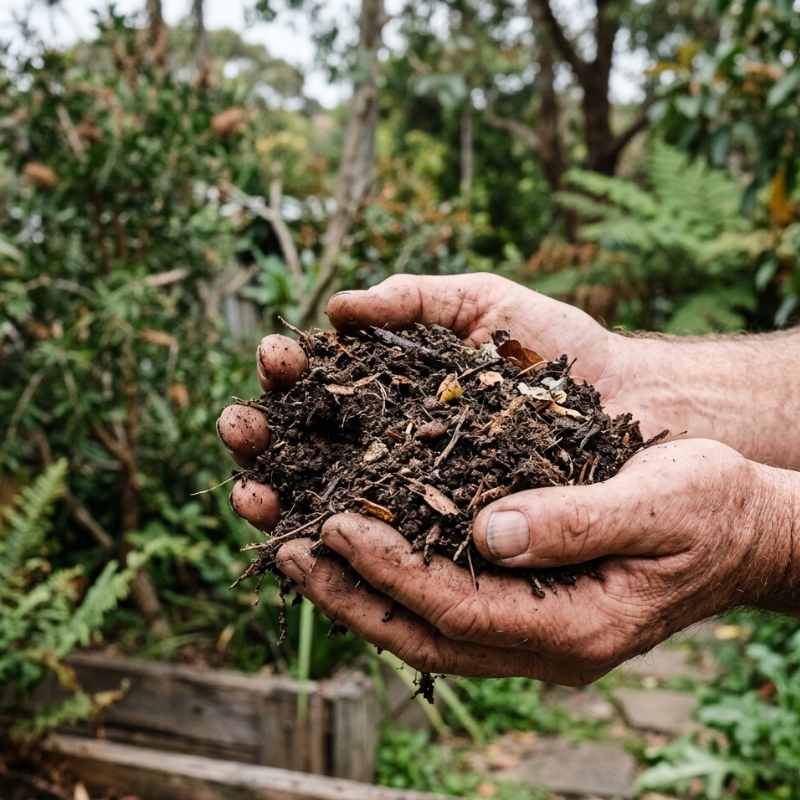
The good news: you don’t need perfect “loam” to grow healthy plants. You just need to understand what you’ve got, then improve it in the right order. This guide walks you through quick at-home tests, the most effective fixes for clay, sand and compaction, and a realistic 30/60/90-day plan that works in Sydney conditions.
What “good soil” actually does (and why Sydney yards struggle)
Healthy soil isn’t just “dirt with fertiliser in it”. It’s a living structure that should:
• Let water soak in (infiltration) rather than run off
• Drain excess water so roots don’t suffocate
• Hold enough moisture and nutrients between watering
• Stay crumbly enough for roots to push through
• Support soil life (worms, microbes) that cycle nutrients naturally
Sydney throws a few curveballs at that ideal:
• Intense downpours that cause runoff and erosion, especially on slopes
• Hot, drying summers that bake bare ground and amplify water loss
• Coastal breezes and sandy profiles nearer the beaches
• Heavier clays common in many western and inner areas
• Building works that strip topsoil and compact subsoil
If you match the fix to the problem (instead of throwing random products at it), your plants will reward you fast.
First: Identify what you’re working with (3 quick tests)
You don’t need lab gear to get a useful diagnosis. Do these three tests and you’ll know what to prioritise.
1) The feel test (texture-by-hand)
Grab a handful of slightly damp soil (not dripping wet). Rub it between your fingers and try to form a ribbon by pressing it between thumb and forefinger.
• Clay-heavy: feels sticky, forms a long ribbon, can look shiny when smoothed
• Sandy: feels gritty, falls apart, won’t ribbon
• Loamy mix: holds together but crumbles easily, ribbons only a little
2) The soak test (infiltration)
In one spot, pour a bucket of water slowly onto the ground.
• If it runs off or pools for ages: likely clay structure issues or compaction
• If it disappears instantly and the surface dries quickly later: sandy profile and low organic matter
• If it sits on top then suddenly vanishes in channels: hydrophobic (water-repellent) sand is possible
3) The screwdriver test (compaction)
Push a long screwdriver, tent peg, or thin stake into moist soil.
• If it’s hard to push in after the top few centimetres: compaction layer is likely
• If it only goes in where cracks exist: clay is shrinking and swelling, but structure may still be tight
Quick Q&A
How deep should I test?
Aim for at least 15–20 cm if you can. Many issues sit below the surface, especially in newer builds.
Should I test after rain?
Test when soil is moist but not saturated. Digging or “working” wet clay can make compaction worse.
The Sydney soil cheat-sheet: Clay vs sand vs compaction
Before you start adding anything, anchor your approach:
• Clay problems are mostly about structure (air spaces, drainage, root penetration)
• Sandy problems are mostly about holding (water and nutrients)
• Compaction problems are mostly about pore space (air + water movement and root access)
The universal hero for all three is organic matter — but how you apply it (and what you do first) matters.
How to improve clay soil in Sydney (without making it worse)
Clay can be incredibly fertile, but it needs the right structure to behave. The big mistake is trying to “fix” clay by pulverising it when wet, or mixing in the wrong amendment.
What clay needs most: aggregation + organic matter
The goal is to help clay particles form stable crumbs (aggregates). That creates pores for water, oxygen and roots.
Best moves:
• Add compost and other well-rotted organic matter regularly
• Mulch the surface to protect against baking and erosion
• Avoid digging when clay is wet (it smears and compacts)
• Improve gradually from the top down (especially around established plants)
What to add to clay (and how)
If you’re starting a new bed or renovating a tired one:
• Spread 3–7 cm of quality compost over the area
• If you’re planting new, incorporate it into the top 15–20 cm (only when soil is not wet)
• For established beds, top-dress and let biology pull it down over time (worms do the work)
Then mulch:
• Keep mulch 5–8 cm deep
• Pull mulch back a little from stems/trunks to reduce rot
What not to do with clay
• Don’t add sand in small amounts and hope for loam (it can create a cement-like mix)
• Don’t dig wet clay “to dry it out” — it often makes a hardpan
• Don’t leave clay bare through summer; it will bake, crack and shed water
Quick Q&A
Why does my clay crack in summer?
Clay expands when wet and shrinks when dry. Cracking is normal, but deep cracking plus poor infiltration often means structure needs organic matter and surface protection.
What’s the fastest improvement for clay?
Top-dressing compost + consistent mulch + avoiding wet digging. You’ll notice better infiltration and plant resilience within weeks, with bigger changes over months.
How to improve sandy soil in Sydney (especially coastal and water-repellent sand)
Sandy soil has big particles and big gaps. Water drains quickly, and nutrients wash through before plants can use them.
What sand needs most: water-holding + nutrient-holding
Your goal is to increase the soil’s ability to hold moisture and nutrients between watering.
Best moves:
• Add organic matter (compost, well-rotted manure, leaf mould)
• Mulch to reduce evaporation
• Water more deeply, less often (once soil can hold it)
• Consider wetting agents if the soil is water-repellent
Water-repellent sand (hydrophobic soil): the Sydney summer trap
If water beads up, runs off dry soil, or only soaks in where cracks exist, you may have water repellence. It’s common in very dry sandy profiles and can spike after hot spells.
What helps:
• Apply a quality wetting agent according to directions (especially in spring heading into summer)
• Thoroughly soak after application so it can work through the profile
• Add compost and keep mulch on — organic matter reduces future repellence
The “layering” method that works well for sand
Rather than mixing huge volumes at once, build a better top layer steadily:
• Top-dress 2–5 cm of compost
• Mulch 5–8 cm
• Repeat seasonally (autumn and spring are excellent times in Sydney)
Quick Q&A
Why do my plants look thirsty right after watering?
In sand, water can move past the root zone quickly. Increasing organic matter and mulching are the long-term fixes; deep watering helps in the short term.
Should I use lots of fertiliser to compensate?
Go gentle. In sandy soil, heavy feeding can leach and stress plants. Focus on building soil first, then use smaller, more regular feeds.
How to fix compacted soil (the hidden problem in many Sydney yards)
Compaction squeezes out air pockets. That reduces root growth, increases runoff, and makes plants more vulnerable to heat and disease.
Common causes in Sydney:
• Foot traffic and pets
• Construction and landscaping machinery
• Repeated mowing on the same lines
• Working soil when it’s too wet
• Thin topsoil over compacted subsoil in new builds
Step 1: Find the compacted layer
Use the screwdriver test in a few spots. If it “hits a wall” at a similar depth, you’ve likely got a compaction layer.
Step 2: Choose the least-disruptive fix
Your best fix depends on where the compaction is:
Compaction in lawn areas
• Consider core aeration (pulling plugs) rather than spiking (spikes can compress sides)
• Topdress lightly with compost or a sandy-loam blend appropriate to the surface
• Water in and repeat seasonally
Compaction in beds with established plants
• Avoid aggressive digging near roots
• Use a garden fork to gently lift and loosen (rock back, don’t turn soil into chunks)
• Top-dress compost and mulch, then let biology do ongoing repair
Severe compaction + drainage issues
If water sits for days, or the ground stays boggy long after rain, you may have a grading or drainage issue that amendments alone won’t solve.
If you want a practical next step for tough sites, this is where getting help improving soil in your yard can save a lot of trial-and-error—especially if the problem is below the top layer.
Quick Q&A
Can I fix compaction without digging everything up?
Often yes. Aeration (lawn), gentle forking (beds), and consistent organic matter + mulch can improve structure over time.
How long does it take?
You can improve infiltration quickly, but rebuilding soil structure is seasonal work. Expect noticeable changes in 6–12 weeks, stronger changes across 6–12 months.
The most common myths that waste time (and what to do instead)
Myth 1: “Just add sand to clay”
Small amounts of sand mixed into clay can create a dense, cement-like blend. If you want to change structure, prioritise organic matter and surface protection.
Myth 2: “More digging equals better soil”
Overworking soil breaks aggregates and can increase compaction—especially in clay. Dig less, add more organics, and let biology build structure.
Myth 3: “Mulch is just decoration”
Mulch is one of the most effective soil tools in Sydney. It buffers heat, reduces evaporation, protects from heavy rain impact, and feeds soil life as it breaks down.
A Sydney-friendly 30/60/90-day soil improvement plan
You don’t need to do everything at once. Here’s a realistic progression.
Days 1–30: Diagnose + stop the damage
• Do the feel/soak/screwdriver tests
• Stop working with clay when wet
• Add mulch to bare surfaces (5–8 cm)
• Start a compost top-dress (2–7 cm depending on condition)
• Adjust watering: slower, deeper where possible
Days 31–60: Build structure and consistency
• Reapply compost in thin layers where it’s sinking in
• If sand is water-repellent, apply a wetting agent and water it through
• Reduce traffic on problem areas (temporary stepping stones help)
• In lawns, consider core aeration if compaction is clear
Days 61–90: Reinforce and plant smarter
• Add another light top-dress and refresh mulch
• Choose plants suited to your conditions (don’t fight the site)
• Keep organics going seasonally (autumn + spring in Sydney are ideal)
If you’re aiming for long-term resilience—less runoff in storms, less thirst in summer, healthier growth—you’re building a system, not chasing quick fixes.
Planting and soil pH basics (keep it simple)
Sydney soils can vary in pH, and pH affects nutrient availability. You don’t need to obsess, but it’s worth testing if plants keep struggling despite good care.
- Use a simple pH kit or take a sample for testing
- Most plants prefer slightly acidic to neutral conditions, but many natives tolerate a wider range
- Adjustments (like lime or sulphur) should be gradual and based on test results
If you want a clear, NSW-specific way to identify soil texture, the NSW Government’s guide to determining soil texture is a handy reference.
Practical “what to buy” list (without overcomplicating it)
For most Sydney homes, these are the staples that deliver real improvement:
- Quality compost (not “mulch compost” blends with lots of undecomposed chunks)
- A mulch suitable for your plants (chunky bark, sugarcane, leaf-based—match the area)
- A wetting agent (only if sand is water-repellent)
- A garden fork for gentle loosening (beds)
- A basic soil pH test kit if plants repeatedly fail
And one more essential: patience. Soil changes with repetition.
When DIY hits its limits (and what to do next)
Sometimes soil problems are symptoms of a bigger site issue:
- Persistent waterlogging even after adding organics
• Runoff and erosion on slopes
• Thin topsoil over rubble or heavily compacted subsoil
• Repeated lawn failure despite correct watering and feeding
• Large areas that need consistent, staged improvement
If your yard needs a structured plan (not a one-off tweak), it can help to get outdoor space upkeep in Sydney so improvements stick through Sydney’s seasonal swings.
FAQs
How often should I add compost?
For problem soils, a light top-dressing in autumn and spring is a strong baseline. Severely depleted soils may benefit from smaller, more frequent additions early on.
Can I improve the soil around established plants without damaging roots?
Yes. Top-dress compost, mulch well, and avoid deep digging near trunks. Gentle forking between plants (not right at the base) can help if compaction is obvious.
Does gypsum fix clay forever?
Think of gypsum as a possible helper for structure in some clays, not a permanent cure. Organic matter, mulch, and good timing (not working wet clay) are the long-term foundations.
Why does water run off my soil instead of soaking in?
Common causes are compaction, poor clay structure, or water-repellent sand. The soak test plus the screwdriver test usually point to the culprit quickly.
What’s better: top-dressing or digging amendments in?
For new beds, mixing compost into the top 15–20 cm can help—when soil isn’t wet. For established beds, top-dressing and mulching is safer and surprisingly effective over time.
How do I know if my soil is compacted?
If a screwdriver is hard to push in (even when soil is moist), roots are shallow, water runs off easily, or plants struggle despite watering, compaction is likely.
What’s one change that helps almost every Sydney soil?
Mulch. It protects soil from summer heat, reduces evaporation, buffers heavy rain impact, and feeds soil life as it breaks down.
I’ve tried everything and plants still struggle—what next?
Re-check drainage, compaction depth, and sun exposure. If site conditions are working against you (hardpan, poor grading, thin topsoil), getting gardening support for Sydney homes can help you identify the underlying constraint and build a realistic improvement plan.
