
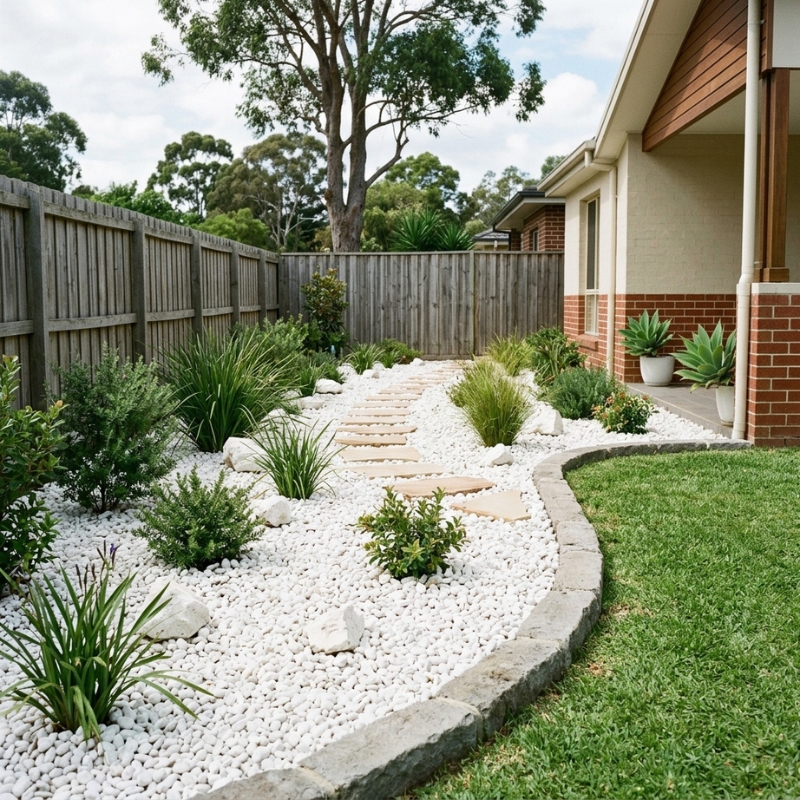
Chasing a garden that looks sharp but doesn’t eat your weekends? White rock and pebble landscaping is one of the easiest ways to get there in Sydney. This guide runs through where it works, the good and the not-so-good, and how to keep it looking crisp. A1 Gardening & Landscaping Sydney has been designing low-maintenance gardens across Sydney for over 15 years, and white stone is a finish we use a lot because it’s clean, it drains, and it holds its look with hardly any effort.
| Quick answer
White rock (or white pebble) landscaping uses light-coloured stone as a ground cover in beds, borders, paths and drainage zones. In Sydney gardens, it’s popular because it’s low-maintenance, drains freely and brightens shaded spots. It still needs the odd rinse and leaf clean-up. For a finish that lasts, it’s worth getting landscaping services in Sydney to prep it properly. |
What is white rock (pebble) landscaping?
White rock landscaping just means using pale, decorative stone as a surface instead of mulch, turf or bare soil. The stone comes in a few forms. Smooth white pebbles give a rounded, river-washed look. Crushed white marble or quartz reads brighter and more angular. Sizes run from small pea-gravel grades up to larger feature stones. You’ll see it across garden beds, along pathways and borders, around trees and shrubs, in pots and planters, and in drainage or dry-creek zones where water needs to move. It’s a favourite for modern, coastal and low-maintenance gardens because it stays put, doesn’t break down like mulch, and bounces light around, which lifts darker corners. Laid over a weed mat with proper edging, it forms a clean, defined surface that keeps its shape season after season without the constant topping up that organic mulch needs.
Best uses for white rock in Sydney gardens
White stone earns its keep in a few specific spots, and Sydney’s climate plays into where it works best. It reflects heat, so it’s brilliant in bright, hard-to-plant areas but worth keeping off delicate ferns that prefer cool, damp soil. Here’s where it tends to shine:
- Low-maintenance front gardens and strips where you want tidy over lush
- Around native and drought-tolerant beds that suit a free-draining surface
- Pathways, borders and edging that need to stay crisp year-round
- Around trees, pots and feature plants as a clean finish
- Dry-creek beds and drainage runs where water needs a clear path
- Shaded courtyards where the pale stone lifts the light
That last point on drainage is a big one in Sydney. White stone over the right base moves water rather than holding it, which makes it handy in wet corners and along run-off lines. If you’ve got a spot that pools after rain, pairing the stone with proper garden drainage solutions turns a problem area into a feature that actually works.
Pros, cons and upkeep
Let’s be straight about the trade-offs. On the plus side, white rock is about as low-maintenance as a garden surface gets. It doesn’t rot or blow away like mulch, it drains freely, it holds weeds back when it’s laid over a mat, and it looks clean and bright all year. The downside is that pale stone shows dirt. In shady, damp or leafy spots it can pick up algae or go green over time, and fallen leaves sit on top where you can see them. None of that’s a dealbreaker, it just means a bit of upkeep. A rinse with the hose, an occasional wash-down, and a leaf blow or rake keeps it looking fresh. Every so often you may want to lift and rinse stones in a really grimy patch, or top up areas that have thinned. Laid well over a weed mat, with good edging to stop it wandering into the lawn, white rock stays sharp with only light seasonal attention. Compared with mulch, which breaks down and needs replacing, or turf, which needs mowing, that light upkeep is a big part of why stone is so popular with busy Sydney households.
White rock vs mulch vs turf for low-maintenance gardens
So how does white stone compare to the other ways of covering ground? Here’s the quick version.
| Option | Look | Maintenance | Cost guide | Best use |
| White rock / pebble | Bright, clean, modern | Low; occasional rinse | Higher up front, low ongoing | Beds, borders, paths, drainage |
| Mulch | Natural, soft | Medium; top up yearly | Lower up front, ongoing | Garden beds, moisture |
| Turf | Green, soft underfoot | Higher; mowing and watering | Moderate | Play and lawn areas |
Each has its place. White rock is the set-and-mostly-forget option and drains beautifully, but it doesn’t feed the soil. Mulch is cheaper to lay and actually improves your beds as it breaks down, though that means topping it up every year or so, and our mulching services handle that side. Turf gives you soft, green space to use, but it’s the most work of the three. Plenty of Sydney gardens use a mix: stone for the low-fuss zones, mulch in the planted beds, turf where the kids play.
How a professional gets it right
You can throw stone on bare dirt, but you’ll regret it by the next season, because weeds push through and the stone sinks into the soil. Doing it properly is what makes the difference. We clear and level the area first, then lay a quality weed mat to block growth while still letting water through. Edging goes in to keep the stone contained, whether that’s steel, timber, concrete or stone to match the garden. Then the right stone goes down at the correct depth, enough to cover fully and stop the mat showing, without being so deep it scatters. Get those steps right and the surface stays clean, weed-free and defined for years. Rush them and you’re re-doing it. That’s the whole reason A1’s landscaping crews prep the base properly before a single stone goes down.
Frequently asked questions
Does white rock landscaping stop weeds?
It holds them back well, but only if it’s laid over a quality weed mat. The stone blocks light and the mat stops growth from below, while still letting water through. Weeds can still seed on top over time, so the odd hand-pull or spot treatment keeps it clean. Bare stone on soil won’t hold weeds back.
How much white pebble do I need for a garden bed?
It depends on the area and the depth. As a rough guide, aim for around 50mm of stone for good coverage, more for larger stones. Measure the length by the width to get your square metres, then your supplier can work out the tonnes. A landscaper can measure and order the right amount so you’re not short or over.
Does white rock get dirty or go green in Sydney?
It can, especially in shaded, damp or leafy spots where algae forms and leaves collect. It’s easily managed. A hose-down, the occasional wash, and clearing leaves keep it bright. In really grimy patches, you can lift and rinse the stone. Sunnier, well-drained positions stay cleaner for longer.
Is white rock or mulch better for a low-maintenance garden?
For pure low maintenance, white rock wins, since it doesn’t break down or need yearly topping up and it drains freely. Mulch is cheaper and feeds the soil, which is better for planted beds, but it needs replacing over time. Many Sydney gardens use stone in low-fuss zones and mulch in the beds.
Final thoughts
White rock and pebble is one of the smartest ways to get a tidy, low-maintenance Sydney garden that drains well and looks good all year. The trick is proper prep: weed mat, edging and the right stone at the right depth. Do that and it pretty much looks after itself. If you’d like it done right the first time, A1 Gardening & Landscaping Sydney can help. Call 0451 267 287 for a free on-site quote on landscaping services in Sydney.
| Ready to book?
Want a low-maintenance garden that stays sharp? A1 Gardening & Landscaping Sydney designs and lays white rock and pebble finishes across Sydney. Call 0451 267 287 for a free on-site quote. |

