


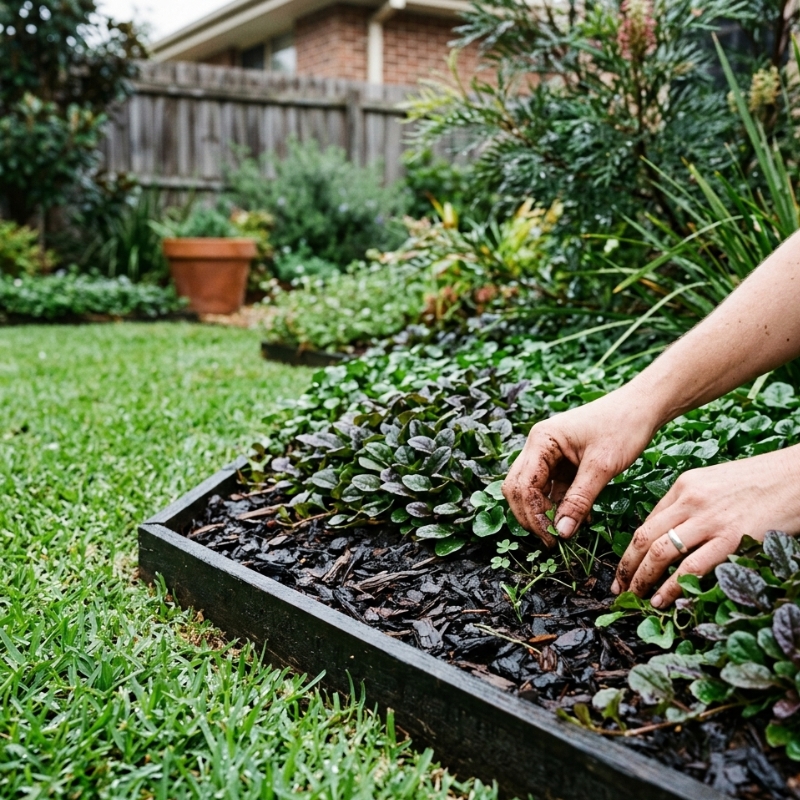
If unwanted growth keeps returning in your Sydney garden, it’s usually for one of three reasons: dormant seeds in the soil are germinating in cycles, certain plants are reshooting from roots or runners you can’t see, or new seeds and creeping growth are constantly entering from edges and nearby areas. This guide breaks down the real causes and gives you a practical weeding-prevention system—so you spend less time pulling and more time maintaining.
Why Sydney gardens get stuck in the regrowth cycle
Sydney’s climate and garden styles make regrowth especially common:
- Warm periods can arrive suddenly, even outside “classic” summer
- Heavy rain events can be followed by humidity and quick growth
- Many suburban gardens have open mulched beds, thin lawn edges, and high foot traffic
- Renovations and landscaping often disturb soil (which wakes up dormant seeds)
So when you pull or cut back without changing the conditions that caused the problem, you’re clearing space for the next flush.
The 6 real reasons it keeps coming back
1) The seed bank is already in your soil
Most gardens contain thousands of dormant seeds per square metre. Some are from last season. Some were dropped years ago. They sit there waiting for the right trigger:
- light hitting the soil surface
- moisture from rain or watering
- warm temperatures
- disturbed soil that brings seeds closer to the surface
That’s why you can “clean” a bed and still see new sprouts pop up after the next rainfall.
Q&A: “How long do seeds stay in the soil?”
It depends on the plant, but many common garden weeds produce seeds that can remain viable for years. Practically, this means you’re not trying to eliminate every seed—you’re trying to stop seeds from germinating and stop new seeds from being added.
2) Some plants regrow from roots, runners or bulbs
A lot of Sydney’s repeat offenders don’t rely on seeds alone. They return because they’re built to.
Common regrowth patterns:
• runners/stolons creep along the surface and re-root at nodes
• rhizomes spread underground and send up new shoots
• deep taproots snap when pulled and reshoot
• bulbs/corms re-sprout if any part remains
If you pull the top growth but leave the engine underground, it’s like mowing hair and expecting it not to grow back.
3) Bare soil is an open invitation
Nature hates a vacuum. If your garden bed is mostly bare mulch with wide gaps, sprouts will appear wherever sunlight reaches the soil.
Bare soil happens when:
• plants are spaced too far apart
• groundcovers are thin or patchy
• Mulch has broken down and become “soil-like”
• You’ve recently removed a large patch and haven’t replanted
This is why prevention isn’t just about removal—it’s also about what replaces the space.
4) Disturbing the soil brings a fresh wave to the surface
Digging, turning beds, pulling out clumps, or even aggressive raking can expose buried seeds to light and oxygen. In Sydney, that can mean a new flush within days when conditions are right.
If you’re doing a reset, aim to disturb the soil as little as possible after the initial clean-out. Think: remove, level, cover, then leave it alone.
5) Reinfestation from outside the bed
Even if you remove everything inside the bed, new material can constantly arrive from elsewhere:
- wind-blown seeds from nearby verges, parks or neighbours
- Birds dropping seeds after feeding
- pets carrying burrs and seeds in fur
- mower wheels and whipper snipper work, flicking seeds into beds
- compost/topsoil that contains seeds
Reinfestation is especially common along fence lines, around letterboxes, and beside driveways where seeds collect.
6) Edges are leaking (lawn creep is a big one)
In Sydney yards, lawn edging is one of the most underrated sources of repeated “mystery” growth. Turf grasses and creepers can invade under mulch, through soft edges, and along garden borders—especially after rain when soil is soft.
If you don’t lock down the boundary, you’ll keep removing the symptoms while the source keeps advancing.
The Sydney pattern: why it’s worse after rain (and often in autumn/spring)
Sydney’s growth spurts often follow this sequence:
- rain soaks the top few centimetres of soilThe
- humidity stays high
- a warm spell follows
- seedlings erupt in a flush
That’s why “it all came back overnight” often happens right after a big weather change. The trick is to plan follow-ups around these predictable flushes, instead of doing one big clean and hoping for the best.
What actually stops regrowth: the prevention system that works
Think of long-term control as four layers. You don’t need perfection in every layer, but the more you stack, the less you battle later.
Layer 1: Remove what’s there the right way
Your goal is to remove the current growth without creating a bigger problem.
Practical approach:
• Pull after rain or watering when soil is moist (roots release more cleanly)
• Work in sections so you can finish each area properly
• For runner-style plants, follow the runner back and lift it intact where possible
• Bag and remove seed heads—don’t leave them on the soil surface
If you’re dealing with repeated regrowth and want a clean, structured plan, start by focusing on one bed or one side of the yard and do it properly, rather than “biting off the whole property” in a weekend. If you need guidance on the practical steps for your specific garden zones, this is where help with stubborn garden growth can be useful as a reference point for what to prioritise first.
Q&A: “Why do they grow back after I pull them?”
Usually because:
• you’ve left regrowth-capable roots/runners behind, or
• you’ve exposed the seed bank and created perfect germination conditions, or
• The area is still bare and sunny, so new seedlings establish immediately
Layer 2: Block light at the soil surface
Light is one of the biggest triggers for germination. Blocking it reduces the next flush.
Mulch that actually works (in real life) usually means:
• topping up so it’s consistently deep enough across the whole bed
• closing gaps right up to plant bases (without piling against stems)
• using a mulch that doesn’t blow away or break down instantly
Common “why mulch didn’t work” reasons:
• too thin (you can still see soil)
• uneven depth (thin patches become seedling nurseries)
• old mulch has decomposed into fine material that sprouts grow through
• mulch applied, but edges still leak lawn runners
If your yard is currently in a constant cycle, consider this a maintenance rule: whenever you can see soil, you’re basically inviting a new round.
Layer 3: Fix the edges so nothing creeps back in
Edges stop two big problems: lawn creep and seed collection lines.
Edge options that reduce regrowth:
• a crisp spade-cut edge maintained regularly
• a physical barrier edging that separates the lawn and beds
• a gravel or path strip that creates a break zone
What matters most is consistency. A great edge maintained every 4–6 weeks beats a perfect edge you do once a year.
If you suspect your edges are the main culprit (beds are tidy but borders keep filling), it’s worth approaching the garden as “zones” and treating lawn boundaries as their own project. For a step-by-step zone approach, Sydney garden weeding support can help you think through which areas are reinfesting the fastest.
Layer 4: Replace empty space with living cover
This is the layer most people skip, and it’s the one that changes the game.
Dense planting reduces regrowth because:
• foliage shades soil, lowering germination
• root systems occupy space and compete for moisture/nutrients
• maintenance becomes trimming and tidying, not constant pulling
Sydney-friendly strategy (without naming specific plants): aim for groundcovers or low shrubs that suit your light conditions and can knit together within a season. In sunny spots, choose hardy, spreading varieties that tolerate heat. In shade, choose plants that fill under tree canopies without needing full sun.
A simple target:
• if you can see large patches of mulch between plants, you likely have room to densify planting
The 8–12 week timeline that changes outcomes
Week 1: Reset and stabilise
- Remove current growth and seed heads
- Level soil gently (avoid deep turning)
- Top up mulch evenly
- Re-establish edges
- Identify the “source zones” (lawn borders, fence line, pavers, neglected corners)
Weeks 2–4: Follow-up after the first flush
Expect a flush after rain or warm spells. That’s normal.
- Walk the garden every 7–10 days
- Remove seedlings while small (seconds, not hours)
- Repair mulch where it’s shifted
- Re-cut edges where creep starts
This is the stage where most people stop—and that’s why it returns.
Weeks 5–8: Densify and reduce the available light
- Add plants/groundcover to bare areas
- Extend mulch into any gaps
- Maintain edges
Weeks 9–12: Lock in the new “baseline”
- Continue quick spot-removal after rain
- Keep the soil covered
- Keep borders crisp
By this point, you’re not “winning forever,” but you should notice a big reduction in how much appears and how fast it establishes.
If you’re stuck in the loop despite doing the basics, it often means one of the layers is missing or the problem is coming from a specific source zone you haven’t treated yet. That’s when what to do when regrowth won’t stop becomes the right next read—because it forces you to diagnose the source, not just attack the visible growth.
Special problem areas in Sydney homes (and what to do)
Garden beds under trees
These areas often look “fine” but keep sprouting because:
• light filters through in patches
• mulch breaks down quickly
• birds perch and drop seeds
What helps:
• consistent mulch depth
• tough, shade-tolerant groundcover to close gaps
• regular 10-minute follow-ups after rain
Pavers, paths and driveway edges
Growth in joints returns because there’s often a mix of:
• sand/dust/organic matter collecting in cracks
• moisture trapped after rain
• seeds dropping into sheltered crevices
What helps:
• remove the build-up (not just the green top)
• keep edges clear of leaf litter
• treat the “collection line” where pavers meet garden beds
Lawn-to-bed borders
If you’re seeing “grass-like” regrowth in beds, the border is almost always the issue.
What helps:
• a defined edge you can maintain easily
• a barrier or break zone
• keeping mulch back from the lawn line so it doesn’t become a bridge
Mistakes that make regrowth worse (even when you’re working hard)
- Leaving seed heads on the ground “to dry out
- Pulling when soil is dry and snapping roots repeatedly
- Raking aggressively and exposing more soil
- Applying thin mulch and expecting it to do the job
- Treating the whole yard once, then ignoring the predictable follow-up flush
- Ignoring borders and fence lines where reinfestation begins
A simple diagnostic checklist (use this before you do another big clean)
Ask yourself:
• Can I see soil through the mulch?
• Are beds mostly bare between plants?
• Is regrowth mainly along edges and borders?
• Does it surge after rain?
• Does it come back from the same clumps/spots (roots/runners)?
• Could seeds be blowing in from a nearby source zone?
Your answers tell you which prevention layer is missing.
When it’s more than a garden nuisance
Some weeds are declared noxious or managed under biosecurity rules, and responsibilities can differ depending on the plant and where you live. If you’re unsure whether something is invasive or restricted, check NSW guidance on weeds and biosecurity before you dispose of it or spread it inadvertently. A reliable starting point is the NSW Government weeds information here: NSW Government biosecurity weeds guidance.
Final FAQ
Does mulch stop unwanted growth completely?
Mulch helps a lot, but it’s not magic. It reduces germination mainly by blocking light and smoothing moisture swings. It works best when it’s even, topped up, and paired with good edging and dense planting.
Why is it worse after I water?
Water (like rain) triggers germination, especially if the soil surface is exposed. If you water regularly and the bed is bare, you can unintentionally create a perfect nursery. Soil cover is what changes that outcome.
Is it better to pull by hand or cut it back?
For seedlings, pulling (or lightly removing) early is fast and effective. For regrowth plants that reshoot from roots or runners, cutting often just buys time unless you also address the underlying root system and prevention layers.
Why does it keep returning to the same exact spots?
That usually signals:
• a root/rhizome problem beneath that patch, or
• a reinfestation source like lawn edging, a fence line, or a crack that collects debris
Treat the “source zone,” not just the visible growth.
What’s the fastest way to reduce it without spending every weekend outside?
Do a proper reset on one high-problem zone, then commit to short follow-ups for 8–12 weeks (especially after rain). Consistency beats marathon sessions.
What if I’ve already done everything and it still returns?
That’s usually a sign one layer is missing:
• edges aren’t sealed
• soil is still exposed
• reinfestation is coming from outside the bed
• the plant type regrows from roots/runners and needs a different removal approach
