
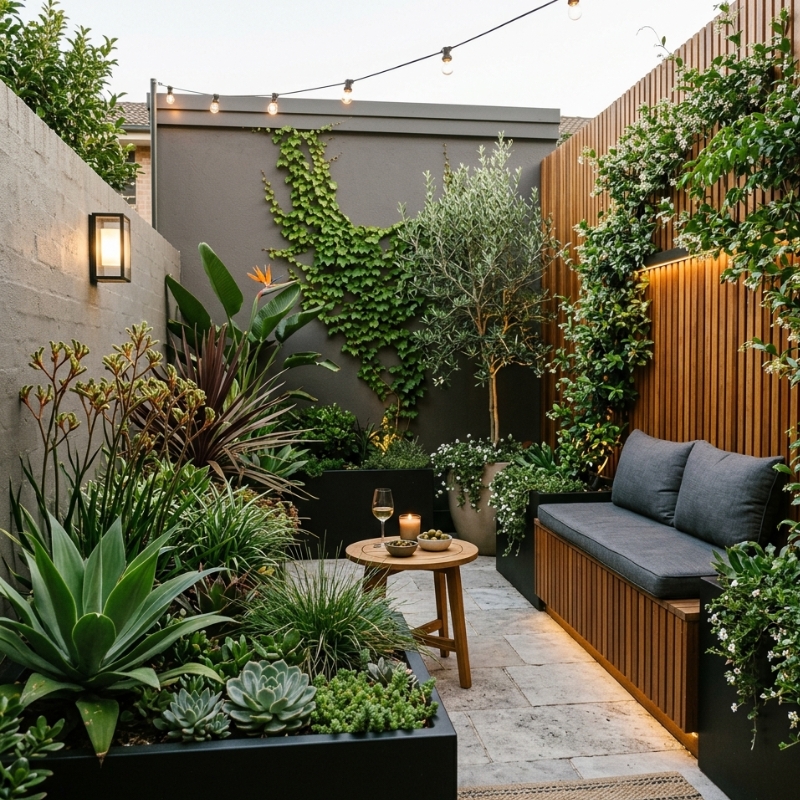
A small garden in Sydney can feel either like a peaceful outdoor room… or a cramped, awkward leftover space. The difference is rarely about budget. It’s usually about having a plan that fits Sydney’s realities: hot western sun, sudden heavy rain, narrow access, smart landscaping choices, and the way privacy can block light if you’re not careful.
This guide walks you through a practical step-by-step makeover process you can follow, whether you’ve got a tiny courtyard, a slim side yard, or a compact backyard behind a terrace or townhouse. Use it to avoid the common traps (too many materials, no clear “zone” for sitting, planting that doesn’t match the sun, and drainage dealt with last).
Step 1: Measure the space you actually use
Before you design anything, measure what’s real, not what’s on the strata plan.
• Measure the total area, then mark the “usable” area (where you can actually walk or sit)
• Note doors, taps, downpipes, air-con units, clotheslines, and bin paths
• Measure fence heights and the distance to neighbouring windows (privacy matters fast in small spaces)
• Check access widths (side gates, stairs, narrow corridors) for bringing in materials or pots
A small-garden win is almost always about improving circulation. If you can move through the space without awkward turns or bottlenecks, it instantly feels bigger.
Q&A: What’s the first thing to fix in a cramped, small garden?
Usually, it’s the layout and circulation, not the plants. If you can’t comfortably walk from the back door to the clothesline/bin area (or to the seating spot) without squeezing past furniture or pots, the garden will always feel cluttered, no matter how nice the planting is.
Step 2: Map sun, shade, and “Sydney heat zones”
Sydney sun behaves differently depending on orientation and nearby walls.
• Morning sun (east) is gentle and great for many plants
• Northern sun is your best all-around light for warmth and growth
• Western sun can be brutal in summer, especially when it reflects off pale fences, paving, or brick walls
• Southern areas can stay shaded and damp, especially in winter
Do a simple sun check:
• Morning: which areas get sun by 9–10 am?
• Midday: Which areas get consistent light?
• Afternoon: where does the harsh heat hit after 3 pm?
If you’re planning anything water-wise, also stay aware of local rules and restrictions. The national directory is a handy starting point to see what applies in your area: Bureau of Meteorology water restrictions directory.
Step 3: Choose your “must-have” zones (keep it to 2–3)
Small gardens feel smaller when you try to cram in everything. Instead, decide what matters most and build around it.
Common zone combos for tight Sydney spaces:
• Seating + planting (the classic courtyard)
• Dining + shade + a slim planting border
• Pathway + screening + vertical planting (side yard)
• Play patch + seating edge + storage
A helpful rule: if it doesn’t support a daily habit (coffee spot, kid play, herb picking, clothesline, hosting), it’s probably not worth the space.
Mini checklist: The tight-space zone test
• Can you walk through without side-stepping?
• Can two people pass each other?
• Is there a clear “destination” (seat, table, feature pot)?
• Is there hidden or built-in storage to reduce clutter?
Step 4: Mock up the layout before you spend money
This step saves the most regret.
• Use a hose, chalk, or painter’s tape to mark edges of paving, lawn, garden beds, and seating
• Move your outdoor furniture into the marked zones (even if it’s temporary indoor chairs)
• Walk the most common routes: door to seat, door to bin path, door to clothesline
• If it feels tight now, it’ll feel tighter when plants grow
If you want a simple sanity-check process before committing, it can help to look at broader planning principles for outdoor upgrades and sequencing. Here’s a useful next-step resource: landscaping ideas for Sydney homes
Step 5: Pick a simple materials palette (fewer looks bigger)
In small spaces, variety becomes visual noise. Limit the palette.
A strong, low-clutter approach:
• 1 main hard surface (pavers, concrete, decking)
• 1 secondary texture (gravel strip, stepping stones, timber screen)
• 1 accent (feature pot, bench seat, a single “hero” plant)
Keep the colour range consistent and avoid busy patterns. The aim is calm and continuous, not “showroom sample board”.
Q&A: Should a small Sydney garden have a lawn?
Sometimes, but it shouldn’t be the default. In a tight space, lawn is only a win if:
• you’ll use it (kids, pets, barefoot comfort)
• it gets enough sun for the turf type
• you can edge it cleanly so it doesn’t look scrappy
If the lawn becomes a skinny strip you never sit on, it often makes the yard feel like a corridor. In that case, a larger hard surface with planting and a small soft “green” moment (like groundcovers or a feature pot) can feel more intentional.
Step 6: Fix drainage early, not at the end
Sydney gardens can swing from dry stretches to intense downpours. In small spaces, water has fewer places to go, so you’ll notice problems fast.
Signs drainage needs attention:
• pooling near the house or against retaining edges
• soggy patches that never dry
• algae on paving or slippery shaded corners
• mulch washing away after rain
Practical first moves:
• Check where downpipes discharge (and whether they overwhelm one spot)
• Improve soil structure in garden beds (compaction is common)
• Keep hard surfaces subtly graded away from buildings
• Use garden beds and planting as part of the solution, not an afterthought
If you’re unsure whether stormwater is moving the way it should, it’s worth getting help with a backyard upgrade that includes a proper layout and runoff plan, especially when the issue is near the home.
Step 7: Build vertical layers to “stretch” the space
Small gardens need height, but not bulk.
Great tight-space vertical tools:
• Slimline screens (timber slats, lattice, laser-cut panels)
• Climbers on trellis (adds privacy without blocking all light)
• Narrow planter boxes (long lines make spaces feel bigger)
• Tiered planting (groundcover + mid-layer + tall accent)
A simple vertical planting structure:
• Front edge: low groundcovers
• Middle: shrubs or strappy plants (clean shapes)
• Back: climbers or narrow upright plants for screening
Q&A: How do I add privacy without making my courtyard dark?
Start with “filtered privacy” instead of solid walls:
• Use slatted screens, lattice, or climbers to soften views
• Place screening where you need it most (near seating), not everywhere
• Choose lighter-toned finishes on fences to reduce the “boxed-in” feeling
• Keep the top portion open where possible so light still travels across the space
Step 8: Choose plants for your microclimate, not just for looks
In Sydney, planting failures usually happen because the plant doesn’t match the sun, heat, or shade.
A practical way to choose:
• Hot western sun: prioritise tougher, sun-loving plants and shade solutions
• Mostly shade: focus on shade-tolerant planting and avoid sun-hungry turf
• Wind tunnel side yard: Use flexible plants and sturdy screening
Also, think about maintenance:
• If you don’t want weekly pruning, avoid fast-growing hedges that demand constant shaping
• Use fewer plant varieties, repeated more often (it looks calmer and is easier to maintain)
• Consider irrigation efficiency and water-wise habits, especially in dry periods
Step 9: Light it for function and atmosphere
Lighting is the “small garden multiplier”. It makes the space usable and feels bigger at night.
Good small-space lighting types:
• Path lights along circulation (subtle, not runway-bright)
• Wall or fence wash lighting to visually widen boundaries
• Uplights on one feature plant (a single highlight is powerful)
Keep lighting purposeful. Too many bright points can feel busy.
Step 10: Style the space like an outdoor room
Small gardens look best when they feel like a room with a clear function.
• Use one outdoor rug or a defined surface to “anchor” the seating
• Choose a bench seat with storage (clutter is the enemy)
• Add one hero pot or sculptural plant, not ten little ones
• Keep accessories minimal and durable
If you’re aiming for a finished look without constant fiddling, the biggest secret is restraint.
Three simple layout recipes for common Sydney small gardens
Narrow side yard (terrace/townhouse classic)
Goal: make it feel like a purposeful walkway, not a dumping zone.
• Keep the path clear and of consistent width
• Add vertical planting or screening to soften fences
• Use long planter lines (they visually lengthen the space)
• Put storage at the far end, not near the door
Small courtyard with neighbours close by
Goal: privacy and comfort without losing light.
• Create a single seating zone and build privacy around it
• Use filtered screening (slats/climbers) rather than solid barriers
• Choose lighter finishes to avoid a “tunnel” feeling
• Use one feature plant to draw the eye up and away from boundaries
Compact backyard with a pool after rain
Goal: solve water movement first, then finish the look.
• Identify where water enters and where it should exit
• Ensure hard surfaces are graded correctly
• Use garden beds to intercept runoff (rather than trapping it)
• Avoid placing the main seating zone where it stays damp
If any of this involves water moving towards the house or persistent pooling, it’s a good time to seek professional landscaping support so the fix is permanent, not cosmetic.
A practical weekend-by-weekend makeover timeline
Weekend 1: Plan and mock-up
• Measure, sun map, and choose zones
• Mark the layout and test circulation
• Decide your materials palette
Weekend 2: Clear and prep
• Remove clutter and anything you’re replacing
• Improve soil in garden bed zones
• Address obvious drainage issues
Weekend 3: Hard surfaces and structure
• Install key surfaces and edging
• Add screening/trellis structures
• Set up the basic layout “bones”
Weekend 4: Planting and finishing
• Plant in layers (low, mid, tall)
• Add mulch, pots, and minimal styling
• Install lighting last so you’re lighting the final shapes
FAQ: Small garden makeovers in Sydney
How can I make my small garden feel bigger quickly?
• Remove clutter and reduce the number of different materials
• Create one clear seating “destination”
• Add vertical elements (screening, climbers, tall plants)
• Improve circulation so you can walk through easily
What’s the most common mistake in small Sydney courtyards?
Trying to include too many features: multiple paving types, too many pots, and no clear zone for sitting. A simpler plan almost always looks more premium.
How do I choose surfaces that won’t be unbearably hot in summer?
Avoid dark surfaces in full western sun, add shade where possible, and think about glare bouncing off light walls. Prioritise comfort underfoot where you’ll actually stand or sit.
What should I do first if water pools in my backyard?
Start by observing where water collects and where it flows in heavy rain. If the pooling is near the house or doesn’t drain within a reasonable time, address grading and drainage before adding new surfaces or planting.
Do I need to worry about water restrictions when planning a makeover?
Yes, because they can affect how and when you can water new plantings and turf. Checking the current rules and planning water-wise choices helps you avoid rework.

