
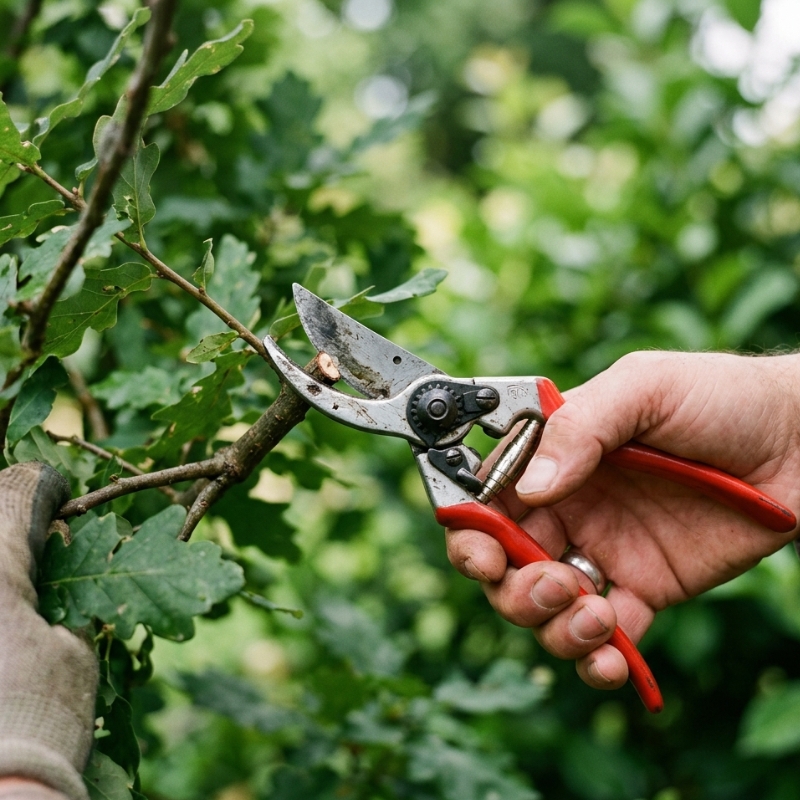
Sydney’s climate is a little different to the “classic” apple-growing regions you’ll see in overseas advice, so even if you already know how to prune an apple tree, we get mild winters, warm springs, humid summers, and sudden storm bursts that can stress trees (and snap poorly supported limbs). That doesn’t mean you can’t grow excellent backyard apples here. It just means timing your cut-backs matters more than you might expect.
The big idea is simple: the best time to do your main cut-back is when the tree is least reactive, and the worst time is when it’s actively pushing soft growth or already under heat/humidity stress. But there are also smaller, strategic cut-backs you can do in other seasons if you know what to remove and what to leave alone.
This guide walks you through Sydney’s seasons, what “cut back” should look like in each one, and how to adjust for young trees, older trees, and trees that have become a bit too big for the backyard.
First: what does “cut back” actually mean for an apple tree?
People use “cut back” to describe a few different jobs. Before you pick a season, get clear on which of these you’re trying to achieve:
• A structural cut-back (bigger limb decisions to shape the tree and reduce weight)
• A size-control cut-back (keeping the canopy smaller or lower)
• A clean-up cut-back (dead, damaged, diseased, crossing, or storm-affected wood)
• A fruiting cut-back (encouraging better light and airflow around fruiting wood)
In practice, most backyard trees need a blend. The key is matching the heavier work to the safest window, then using lighter touch-ups in other seasons if needed.
Quick answer
For most Sydney backyards, the safest “main cut-back” window is winter while the apple tree is dormant. If you need small corrections in other seasons, keep them light and targeted (think: removing suckers, water shoots, dead wood, or small problematic growth), and avoid heavy cuts during heatwaves, peak humidity, and late spring when the tree is pumping energy into new growth.
How Sydney seasons affect apple trees
Apple trees are deciduous. In Sydney, they still follow the dormancy-to-growth cycle, but the transitions can be quicker and less dramatic than colder regions:
• Winter: lower activity (best for the main cut-back)
• Early spring: rapid bud and shoot growth (easy to overdo cuts)
• Late spring to summer: active growth + humidity + pest/disease pressure (best for light, careful work only)
• Autumn: energy storage and wound response changes (generally not the best time for big cut-backs)
Winter (June to August): the main cut-back season
Winter is the season most people should plan around for the “real” cut-back.
Why winter works in Sydney
• The tree is dormant, so it’s less likely to respond with a burst of soft, messy regrowth
• You can see the branch structure clearly without leaves
• You can make better decisions about shape, balance, and safety
What winter cut-backs are best for
• Structural shaping (especially on young trees)
• Reducing overgrowth (carefully, without stripping the tree)
• Removing larger deadwood or problem branches
• Opening the canopy for better airflow next season
What to focus on (in plain language)
• Remove dead, damaged, or clearly diseased wood first
• Remove branches that cross and rub (they create wounds and invite issues)
• Reduce overcrowding so light can reach the inner canopy
• Remove strong upright shoots that shoot straight up and shade fruiting areas (often called water shoots)
A practical winter rule for backyard trees
If your apple tree has been neglected or has grown rapidly, resist the urge to “fix everything” in one go. A heavy cut-back can trigger a big flush of water shoots in spring. In many cases, a staged approach over 2 winters gives a better result and looks far less brutal.
If you want a safe framework for planning bigger branch decisions, use a tree pruning and trimming guide that prioritises branch safety, clean cuts, and canopy balance.
Q&A: Is late winter better than early winter in Sydney?
Often, yes. Many gardeners prefer late winter because it’s closer to spring growth, and you’re less likely to get prolonged cold/wet conditions immediately after cuts. But in Sydney, the bigger difference is less about temperature extremes and more about your tree’s state. If buds are already swelling fast, you’re edging into early spring behaviour. That’s when you should be more conservative with big removals.
Early spring (September): proceed carefully
Early spring in Sydney can move quickly. A few warm spells and your tree can go from “bare sticks” to active growth in no time.
What is early spring good for
• Finishing small leftover winter tasks if you missed them
• Very light shaping adjustments
• Removing obvious dead tips you didn’t notice in winter
What to avoid
• Heavy cut-backs of large limbs
• Big canopy reductions that will push the tree into stress + rapid regrowth
Why it’s riskier now
When the tree is pushing energy into buds and shoots, major cutting can lead to vigorous, vertical regrowth. That regrowth can shade fruiting wood and make next winter’s job harder.
Q&A: I missed winter. Can I cut back my apple tree in September?
You can, but keep it light. Focus on the “must remove” category: dead wood, broken limbs, and small branches that are clearly rubbing or crossing. Save major structure changes for next winter.
Late spring (October to November): light touch only
This is when many Sydney apple trees are leafed up, growing, and potentially flowering or setting fruit (depending on variety and your microclimate).
What is late spring good for
• Removing suckers from the base (these steal energy)
• Removing a few water shoots if they’re small and clearly unhelpful
• Tidying very small growth that blocks airflow in the centre
What to avoid
• Cutting back large limbs
• Removing lots of leafy growth (you’re removing the tree’s energy factories)
• “Topping” the tree (this usually creates more vertical shoots and weak structure)
Sydney-specific factor: storms
Late spring can bring storms and sudden wind. If you have a limb with a crack, poor attachment, or obvious risk over a path, it may be safer to address it promptly rather than waiting. That’s where help with structural tree pruning is less about looks and more about preventing branch failure.
Q&A: Will cutting back now reduce this year’s fruit?
It can. If you remove fruiting wood or significantly reduce leaf area during late spring, you may reduce fruit size, fruit set, or the tree’s ability to ripen fruit well. That’s why spring is usually about small, targeted corrections rather than reshaping.
Summer (December to February): size-control with restraint
Summer is the most misunderstood season for apple tree cut-backs.
Here’s the truth: you can do useful summer work, but it should be modest and intentional.
What summer cut-backs can be good for
• Controlling excessive vigour (especially if the tree blasts out lots of upright shoots)
• Improving airflow to reduce humidity-related issues in dense canopies
• Removing small water shoots before they turn woody and annoying
What to avoid in Sydney summers
• Big limb removals during hot spells
• Cutting back hard right before or during a heatwave
• Removing a lot of shading foliage on the western side (afternoon sun is harsh)
A sensible summer approach
• Remove only small, soft shoots that are obviously crowding the centre
• Aim to open “windows” for airflow, not strip the tree bare
• Keep cuts small and clean, and avoid ripping or tearing bark
Heat and stress warning
If your tree is already stressed (wilting, leaf scorch, dropping fruit early), postpone non-urgent cutting. In Sydney, it’s often better to protect the tree through the hottest period and do your main corrections in winter.
Q&A: Is it safe to cut back an apple tree in summer in Australia?
Small, careful cuts can be safe, especially for removing water shoots and improving airflow. Heavy reductions are risky in heat and humidity. If you’re unsure, default to “light only” in summer and plan the main cut-back for winter.
Autumn (March to May): tidy, assess, and prepare for winter
Autumn in Sydney is a transition season. Your apple tree is slowing down, storing energy, and preparing for leaf drop.
What autumn is good for
• Post-harvest tidy-up (very light)
• Removing dead or broken twigs that you can clearly identify
• Assessing structure while there are still leaves (you can see where it’s too dense)
• Planning your winter cut-back
What to avoid
• Major limb cuts, especially early autumn when it’s still warm
• Large reductions that could trigger late growth (not ideal heading into cooler months)
A smarter autumn move: mark problems for winter
If you notice crossing branches, crowded centres, or heavy limbs overhanging areas you use, consider tying a soft marker ribbon on the branch (not tight) to remind you in winter when the structure is easier to see.
Q&A: Is autumn pruning bad for apple trees?
It’s not automatically “bad”, but it’s often not the best timing for big changes. Light clean-up is usually fine. Larger cuts are typically better held for winter dormancy.
A simple Sydney cut-back calendar (what to do, season by season)
Winter (June–August)
• Main cut-back: structure, size reduction, canopy opening
• Remove dead/damaged/diseased wood
• Fix crossing and rubbing branches
Early spring (September)
• Small corrections only
• Remove obvious hazards if needed
• Avoid heavy reductions
Late spring (October–November)
• Remove suckers and a few small water shoots
• Minor airflow tweaks
• Avoid big cuts that reduce leaf area
Summer (December–February)
• Light size-control (small water shoots)
• Improve airflow carefully
• Avoid heavy cuts in heat/humidity
Autumn (March–May)
• Light tidy-up post-harvest
• Assess, plan, and prepare
• Save big decisions for winter
How to adjust timing for young vs mature apple trees
Young trees (first 3–5 years)
Your priority is building a strong framework. Winter is still your main season, but the style of cut-back matters:
• Focus on shape, spacing, and strong branch angles
• Avoid overly aggressive reductions that slow establishment
• Remove competing leaders if you’re forming a single main trunk
Because young trees set their long-term structure early, getting the framework right is the best “future-proofing” you can do.
Mature trees (established producers)
Your priority shifts to maintenance and fruiting efficiency:
• Winter: open the canopy and remove ageing/poor-positioned branches gradually
• Summer: light control of vigorous shoots if the tree gets overly dense
• Autumn: assess fruiting performance and light levels, then plan winter work
If you’ve inherited a mature tree that hasn’t been touched for years, a staged approach (two or more winters) is usually kinder and produces a more stable structure.
Signs you’re cutting back at the wrong time
If you’re unsure whether your timing is off, watch for these clues:
• Explosive upright shoot growth after cutting (often from cutting too hard at the wrong time)
• Sunburnt bark or leaf scorch after removing too much shading foliage in summer
• Poor flowering the following season after a heavy spring or summer reduction
• Repeated disease or mildew issues from leaving the canopy too dense (sometimes the issue is not “when”, but “not opening enough”)
After you cut back: what to do next
This is where backyard trees often get forgotten. A few simple steps help your tree recover well.
• Clean up pruned material promptly (especially if any wood looked diseased)
• Disinfect tools between trees if you’re doing multiple fruit trees
• Keep mulch a handspan away from the trunk (don’t pile it against bark)
• Water deeply during dry spells, especially after a summer tidy-up
• Watch for vigorous shoots (water shoots) in spring and summer and remove small ones early
If your tree is tall, awkward, or you’re dealing with heavy limbs, it’s worth using pruning support for backyard trees that prioritises safety and tree health, not just “making it smaller”.
When it becomes a safety job (not a weekend tidy-up)
Apple trees can get deceptively heavy. A limb that looks manageable can be a serious hazard once it starts moving or splitting.
Consider professional help if:
• The tree is taller than you can safely reach from the ground
• Limbs extend over driveways, roofs, or high-traffic areas
• There are cracks, including bark, or weak branch unions
• You’re tempted to use a ladder and a saw at the same time
• The tree sits near powerlines (even if you think you’re “not that close”)
Safety aside, structure matters. Poor cuts and “random reductions” can create weak regrowth that fails in storms later.
A Sydney-friendly checklist before you cut back
• What’s the goal? (structure, size-control, clean-up, fruiting airflow)
• What season are you in, and is the tree dormant or actively growing?
• Are there any clear hazards that shouldn’t wait?
• Can you clearly identify dead/damaged/diseased wood first?
• Will your cuts be mostly small (preferred outside winter) or large (best in winter)?
• Is a staged approach better than doing too much in one go?
Final FAQ: Apple tree cut-back timing in Sydney
What’s the best month to cut back an apple tree in Sydney?
For most backyards, the safest time for the main cut-back is in winter during dormancy. Many people aim for mid-to-late winter so the structure is clear and the tree is closer to spring growth without being fully active yet.
Can I cut back an apple tree after it fruits?
Yes, but keep it light. After harvest, a small tidy-up can be useful, but bigger structural changes are usually better saved for winter.
Is it OK to cut back an apple tree in summer?
Light summer work can help manage vigorous upright shoots and improve airflow, but avoid heavy reductions during Sydney’s heat and humidity. If the tree looks stressed, postpone non-urgent cuts.
Should I cut back an apple tree in autumn?
A gentle tidy-up is usually fine. Avoid major limb removals in autumn and plan the main work for winter dormancy.
What happens if I cut back too hard?
Heavy cut-backs often trigger lots of fast, upright regrowth (water shoots). That can make the canopy denser, reduce fruiting efficiency, and create more work next winter. If the tree is very overgrown, reducing it over more than one winter is often the better path.
How do I know if my tree is dormant enough for bigger cuts?
A dormant apple tree has dropped leaves and is not actively pushing buds or soft shoots. In Sydney, dormancy is usually most reliable through winter, but warm spells can speed up bud movement toward late winter/early spring.
Where can I find trusted info about apples in NSW?
For the NSW context and general orchard guidance, see the NSW Department of Primary Industries overview on pome fruit like apples and pears: NSW DPI pome fruit information.

