
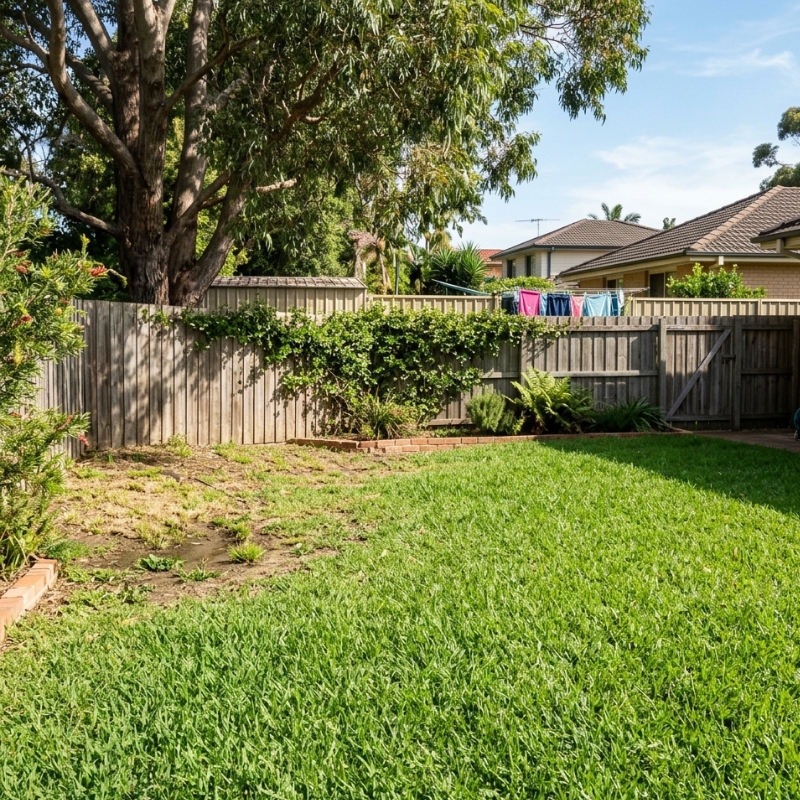
Healthy turf behaves like a living mat: thick leaf cover, strong roots, and minimal exposed soil. When turf gets stressed (water issues, soil issues, sun issues), it thins out. Once there’s open space, opportunistic plants and fast-growing runners can move in and dominate.
This guide breaks down the 7 most common causes Sydney homeowners miss, with simple tests to diagnose your lawn before you spend money or effort in the wrong direction.
The simple rule: thin turf invites takeover
Think of your lawn like a crowd. When it’s packed shoulder-to-shoulder, there’s no room for anyone else. When gaps appear, newcomers slide right in.
Your job is to work out why the gaps are appearing. Then you fix the cause—not just the symptom.
Quick answer
In Sydney, the most common reasons lawns get overrun are: shallow watering habits, poor drainage after rain, compacted soil, scalping or blunt mowing, low nutrients (or the wrong fertiliser timing), not enough sun, and stress from heavy traffic or pets. Start with a quick diagnosis (drainage + compaction + sun hours), then adjust mowing height and watering routine to rebuild turf density.
Start here: a 10-minute Sydney lawn diagnosis
Before the 7 causes, do these three checks. They’ll point you to the right section fast.
1) The screwdriver compaction test
Push a long screwdriver (or tent peg) into the lawn after watering or after rain.
• Goes in easily 10–15 cm: compaction is likely not your main issue
• Stops at 2–5 cm or needs force: compaction is a major contributor
• Easy in some spots but hard in others: you’ve got traffic lanes or inconsistent soil
2) The “puddle vs runoff” drainage check
After a decent rain (or a hose soak), watch what happens.
• Water pools and stays: drainage is poor / soil is sealed
• Water runs off downhill quickly: soil may be compacted or hydrophobic, and roots stay shallow upslope
• Water disappears fast, but the lawn still looks stressed: you may have dry patches or thatch blocking penetration
3) The sun-hours reality check
Pick the worst area and estimate the daily direct sun.
• 6+ hours: most warm-season turf has a fighting chance
• 3–5 hours: expect slower thickening and more bare spots unless turf type suits shade
• Under 3 hours: lawn will struggle—solutions may be groundcover, mulched beds, or shade-tolerant varieties
Q: Why do the same patches fail every year?
A: Repeating failure in the same strip usually means a repeating condition: shade from seasonal tree growth, a compacted traffic path (bins, side gate), a drainage line, or a low spot that stays wet after summer storms.
Cause 1: You’re watering “often” instead of “deep”
Sydney’s heat bursts and windy days can make lawns look thirsty fast, so people top up with quick, frequent watering. The problem is that frequent light watering trains roots to stay near the surface—exactly where the soil dries out and heats up first.
Signs this is your issue
• Lawn greens up quickly after watering, then fades again within a day or two
• Turf pulls up easily (shallow roots)
• Dry-looking patches appear despite “watering all the time”
What to do instead
• Water less often but more thoroughly, so moisture reaches deeper roots
• Check your watering practices align with Sydney Water’s Water Wise Guidelines (timing and mindful use) via Sydney Water’s Water Wise Guidelines • Use the “tuna can test”: place a few straight-sided containers around the lawn, water normally, and measure how much water lands in each spot. Uneven results mean your sprinkler coverage is part of the problem.
Q: How do I know if I’ve watered deeply enough?
A: After watering, push a screwdriver into the soil. If it slides in easily to around 10 cm in most places, you’ve likely watered deeply enough to support stronger rooting.
Cause 2: Poor drainage after rain creates stress and bare spots
Sydney can swing from dry periods to heavy rain—especially during stormy weeks. In many suburbs, clay-heavy soils or compacted subsoil mean water sits on top. Grass roots need oxygen. When soil stays soggy, roots suffocate, turf thins, and gaps appear.
Signs this is your issue
• Water sits on the surface or squelches underfoot
• Yellowing patches after wet periods
• Mossy or slimy surfaces in shade
• The lawn looks worse after rain, not better
What to do first
• Identify low spots and pooling zones (they often need levelling or improved drainage pathways)
• Avoid mowing or heavy foot traffic when the soil is saturated (it compacts more)
• Consider aeration in the right season for your turf type (see Cause 3)
A simple post-rain checklist
• Walk the lawn and mark pooling areas with a garden stake
• Look for channels where water runs off quickly—these are often compacted “sealed” lines
• Check downpipe outlets and overflow paths (water may be directed onto turf unintentionally)
Cause 3: Compacted soil prevents turf from thickening
Compaction is one of the biggest “silent” reasons lawns fail in Sydney—especially alongside gates, near clotheslines, around trampolines, and anywhere you repeatedly walk.
Compacted soil means: less oxygen, poorer water penetration, and fewer fine roots. Turf can’t knit together densely, so open soil appears, and takeover becomes easy.
Signs this is your issue
• Hard ground that’s tough to dig
• Water runs off instead of soaking in
• Grass looks thin even with decent sun
• The worst areas match traffic patterns (bins, kids, pets)
What helps
• Core aeration (removing plugs) is generally more effective than just spiking holes, because it actually relieves compaction
• Topdressing with an appropriate soil blend after aeration can improve soil structure over time
• Redirect traffic: create stepping stones, a path, or a defined route to reduce repeated compaction on the same strip
Q: Can I fix compaction without redoing the whole lawn?
A: Often, yes. If the turf is still alive and you’re not dealing with major drainage failure, aeration + topdressing + mowing and watering adjustments can gradually rebuild density. If large areas are dead or the soil is sealed like concrete, you may need more involved soil improvement.
Cause 4: Mowing too low (scalping) or too infrequently
This one catches people out because the lawn can look neat right after a shortcut—then it falls apart.
Scalping removes too much leaf surface, which the grass uses to photosynthesise. It also exposes soil to heat and light, drying it faster and creating the perfect opportunity for opportunistic growth.
Two common patterns
• Cutting too low every time (especially with the couch)
• Letting it grow long, then chopping it back hard (a stress cycle)
Better mowing habits for thicker turf
• Follow the “one-third rule”: never remove more than one-third of the grass height in one mow
• Keep blades sharp—blunt blades tear, increasing stress and disease risk
• Adjust height seasonally: slightly higher in hot/dry periods and in partial shade
If you’re unsure what’s right for your lawn type, start by raising the mower one notch and observe for 2–3 weeks. Thickening is gradual, but stress reduction is often immediate.
Cause 5: Nutrient imbalance (not just “needs fertiliser”)
A thin lawn isn’t always a low-fertiliser lawn. Too little nutrition can weaken turf, but too much (or poorly timed feeds) can create soft growth, disease pressure, or strong top-growth with weak roots—again leading to thinning.
Signs you may be under-feeding
• Pale colour across the whole lawn
• Slow growth during the growing season
• Poor recovery from wear
Signs you may be overdoing it (or timing is off)
• Rapid growth that needs mowing constantly
• Spongy thatch build-up
• Burnt patches after feeding
• Increased fungal issues in humid or wet spells
Practical approach
• Use a seasonal plan suited to warm-season turf common in Sydney (buffalo and couch are frequent)
• Consider a soil test if you’re repeatedly chasing problems in the same area
• Focus on building resilience: balanced nutrients + soil health + good mowing and watering habits
Q: Why does my lawn look worse after fertilising?
A: Over-application, fertilising in heat stress, or applying before heavy rain can damage turf or push lush growth that isn’t supported by strong roots. If you’ve had this happen, pause feeding and focus on consistent mowing height and watering until the lawn stabilises.
Cause 6: Not enough sun (or the wrong turf for the light you have)
Sydney backyards often have a tough sun-and-shade mix: fences, neighbouring houses, pergolas, and trees. Even if most of the yard is sunny, one shaded edge can stay thin all year, turning into a “takeover strip”.
Key point: You can’t out-maintain a light problem forever.
What to do
• Measure sun hours (not guesses). Take photos at 9 am, noon, and 3 pm for a few days.
• Reduce competition where possible: prune canopy (where appropriate), thin overhanging branches, or raise tree skirts for more light.
• Adjust expectations under heavy shade: mulch beds, stepping stones, or shade-tolerant groundcovers can look better than struggling turf.
Cause 7: Traffic stress, pets, and “hot spots” you’re not noticing
Some lawns fail because they’re being used hard—often in ways you don’t see until you map it.
Common Sydney “hot spots”
• Side access lanes where everyone walks
• The path to the Hills Hoist or clothesline
• Dog run lines along fences
• Kids’ play zones and trampoline perimeters
• Areas under dripping aircon units or downpipes
Solutions that don’t require major landscaping
• Rotate play equipment positions
• Create a defined path (pavers, gravel, stepping stones)
• Repair and protect weak zones early (before they become bare)
• Address water sources that constantly wet one area (drips, runoff, overspray)
Q: Why is it always worse along the fence line?
A: Fence lines often combine multiple stressors: shade, heat reflection, compacted access paths, and competition from roots of hedges or trees nearby. Treating it as a “microclimate” zone usually works better than treating it like the rest of the lawn.
What to fix first: a practical order of operations
When lawns are getting taken over quickly, the fastest improvement comes from tackling the causes in the right sequence.
- Stop the stress
• Raise mowing height slightly
• Sharpen mower blades
• Avoid mowing saturated soil
• Fix obvious overspray or constant wet spots - Get water right
• Move to deeper watering and better coverage
• Use timing that suits Sydney conditions and local guidance - Fix soil constraints
• Address compaction (aeration + topdressing)
• Tackle drainage issues (pooling/runoff) before expecting thickening - Work with the light you have
• Confirm sun hours
• Improve light where possible
• Make a plan for areas that can’t realistically support turf - Restore density
As turf thickens, the takeover problem naturally reduces because there’s less space available.
Where garden beds fit into this (and why it matters)
If your lawn edge bleeds into garden beds or vice versa, it’s harder to keep everything looking clean. Crisp borders, mulched beds, and healthy turf make it much easier to manage general regrowth around the yard.
If you’re already improving turf density and want to keep beds from becoming a constant battle, you may want help with garden weeding as a next step—especially for garden edges, paths, and areas where handwork matters.
Common homeowner mistakes that keep the cycle going
• Trying a new “fix” every weekend without diagnosing the cause
• Mowing low to make the lawn look neat (then exposing soil)
• Watering little and often
• Ignoring compaction in traffic strips
• Expecting turf to thrive in deep shade
• Letting garden edges blur into lawn edges
If your goal is a consistently tidy yard, a simple routine helps: keep turf healthy, keep borders clear, and keep garden beds tidy so regrowth doesn’t creep back into the spaces you’ve just improved.
When it’s time to bring in a licensed or experienced pro
This isn’t about “can’t do it yourself”—it’s about recognising when the fix requires tools, experience, or multiple steps.
Consider professional help if:
• Water pools for days, or the yard has clear drainage failures
• Large areas are dead, and the soil is heavily compacted
• You suspect grading/levelling is needed to correct runoff
• Shade is severe, and you need a redesign plan
• You want the yard to stay consistently neat with ongoing garden maintenance as a practical routine (especially if you’re time-poor)
FAQ
Why does my lawn get taken over fastest after rain?
Rain can expose drainage and compaction issues. If water sits or runs off, turf roots struggle, grass thins, and gaps open up. After wet weeks, traffic compacts soil even more, making the next rain event worse.
Is it normal for lawns in Sydney to thin out in summer?
Some thinning can happen during heat stress, especially with inconsistent watering or mowing too low. But significant thinning usually points to shallow roots, compaction, or poor mowing habits.
Why are bare patches always in the same spot?
It’s almost always a repeating condition: shade, traffic, a low spot, runoff path, pet habit, or a drip line from a downpipe/aircon.
Can I fix thin turf without ripping everything out?
Often yes—if the turf is still alive and the main issues are mowing height, watering routine, and compaction. If drainage is failing or large sections are dead, you may need more significant soil or levelling work.
What’s the quickest change that makes a visible difference?
Raising mowing height slightly and improving watering depth/coverage are usually the fastest “visible” wins—because you reduce stress immediately and support stronger roots.
Why does the lawn look fine in one area but not another?
Microclimates. Fence lines, shaded corners, compacted strips, and low spots behave like different lawns—even within the same backyard.

