
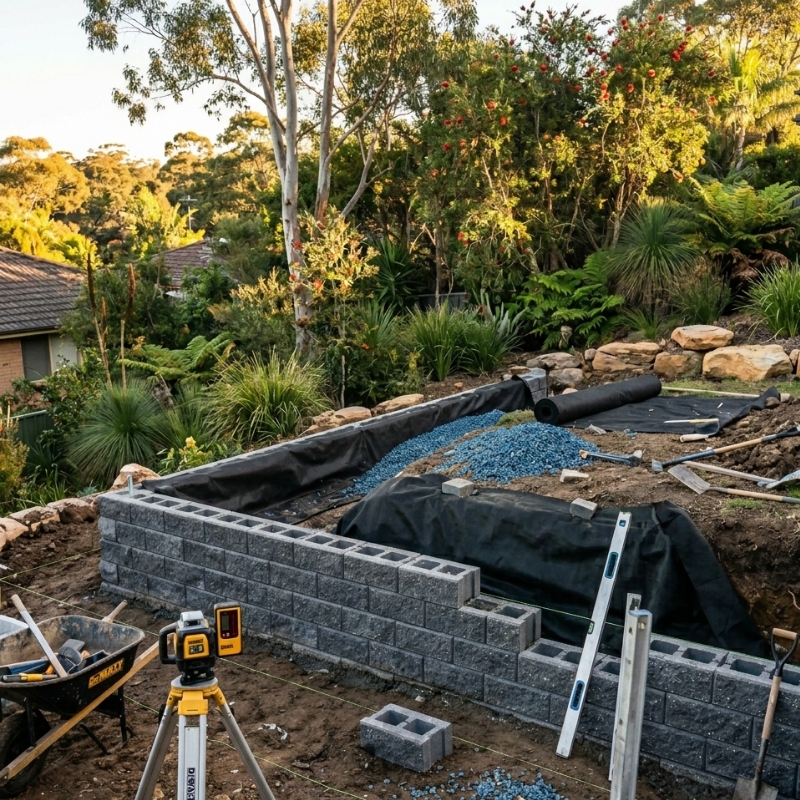
Retaining walls do much more than hold back soil—they protect your home from erosion, manage rainwater runoff, and shape usable garden space on Sydney’s famously sloping blocks. Because they look like simple stacked blocks or timber sleepers, it’s tempting to grab a shovel and attempt a weekend DIY build. Yet every season, we’re called out to rebuild walls that have cracked, bowed, or even collapsed due to small oversights that only appear obvious after the damage is done.
If you’re weighing up a hardware-store kit versus bringing in retaining wall specialists in Sydney, this guide unpacks the behind-the-scenes details most homeowners miss. We’ll compare skill requirements, hidden costs, drainage design, permit triggers, and long-term maintenance so you can decide with eyes wide open.
1. Understanding the True Purpose of a Retaining Wall
A retaining wall isn’t just a decorative boundary. In many Sydney backyards it:
- Holds back tonnes of soil on sloping sites common from the North Shore to the Hills District
- Redirects stormwater during sudden downpours that follow summer heatwaves
- Prevents subsidence around pool areas or new decks
- Creates level lawn or entertaining zones on sandstone or clay sub-soils
Missing any of these functional details—particularly drainage or footing depth—can weaken the wall long before it looks “finished”. Professionals start by assessing soil type, water flow, and load calculations, then choose materials, footings, and backfill to suit.
2. Permit and Compliance Traps That Catch DIY Builders
Small garden walls under 600 mm can be “exempt development” in many council areas. The moment your design climbs higher, supports a driveway, or changes natural ground levels, extra rules apply. Sydney councils differ, but you’ll typically need:
- Precise site plans showing levels and setbacks
- Engineering drawings for walls above 1 m–1.2 m (height varies by council)
- Drainage design that connects to lawful discharge points
- In bushfire-prone or flood-prone zones, additional construction standards
Missing paperwork can trigger fines or an order to remove the structure—costly after you’ve already bought materials. Professionals factor compliance checks into the quoting stage and refer to the NSW Planning Portal guidelines on exempt versus assessable work.
3. DIY vs Professional: Side-by-Side Comparison
The table below highlights practical differences many homeowners only discover mid-project:
| Aspect | DIY Build | Professional Build |
| Design & Load Calculations | Basic online calculators or guesswork; risk of under-engineering | Engineer-backed calculations matched to soil tests and slope |
| Tools & Equipment | Shovel, spirit level, rental compactor; manual labour | Laser levels, excavators, plate compactors, and drainage pipe installers |
| Permits & Engineering | Homeowner researches varying council rules; time-consuming | Builder/landscaper handles permits, drawings, and inspections |
| Drainage Solutions | Often limited to gravel behind the wall | Geo-fabric, agricultural pipe, weep holes, stormwater connection |
| Material Handling | Hand-carrying blocks/sleepers; higher injury risk | Machinery lifts heavy units safely; correct compaction achieved |
| Hidden Costs | Tool hire, soil disposal, permit fees, rework | Higher upfront quote but bundled services, warranty, and workmanship guarantee |
| Long-Term Liability | The homeowner is liable if the wall fails or the neighbour’s land is damaged | Licensed contractor carries insurance; can address defects |
Why the upfront quote difference can be misleading
A DIY budget might look lighter until you add soil removal, tool rental, and lost weekends—not to mention repainting or replacing a failed wall. Professionals often include soil disposal, drainage pipe, and compacted road base in one line item.
4. Common DIY Mistakes We Rebuild (So You Don’t Repeat Them)
- Shallow footings – Sydney’s clay soils expand and contract between drought and downpour, lifting shallow walls out of alignment.
- Skipping geogrid reinforcement – Taller segmental block walls rely on geogrid layers buried in backfill. Leaving these out causes a forward lean.
- Poor drainage – Backfilled soil acts like a sponge. Without pipe outlets, hydrostatic pressure cracks sleepers or pushes blocks apart.
- Timber rot at ground contact – Untreated pine sleepers look fine for two summers, then rot where they meet damp soil.
- Incorrect block stacking pattern – Segmental blocks lock together when staggered. Stack joints vertically, and stress follows the weak line.
- Under-estimating soil weight – One cubic metre of wet clay can weigh 1.8 tonnes. Without proper compaction, the wall shifts as the earth settles.
5. Drainage: The Invisible Lifeline Behind Every Wall
Greater Sydney averages around 1,200 mm of rainfall a year, with heavy bursts driven by east-coast lows. Drainage design should consider:
- Agricultural (agg) pipe – Laid at footing level, wrapped in geo-fabric, and directed to stormwater lines.
- Scoria or gravel backfill – Promotes free water flow rather than trapping moisture.
- Weep holes – Allow seepage through the front face of masonry walls.
- Filter fabric – Prevents soil particles from clogging gravel layers.
Professionals calculate pipe fall (minimum 1:100), choose gravel size, and integrate inspection outlets. DIY builders often rely on general-purpose blue metal and hope gravity does the rest.
6. Material Selection: More Than Timber vs Block
Timber sleepers look affordable, but hardwood or H4-treated pine is essential for ground contact. Masonry blocks carry engineered ratings, while concrete sleepers resist termites and rot. Gabion baskets add a modern aesthetic but need stone fill and can be labour-intensive.
For a deeper dive into choosing wall systems, see our comparison of sleeper vs block retaining walls.
7. Safety, Insurance, and Neighbourly Considerations
A collapsing wall can damage a neighbouring fence, pool, or even injure someone. Home insurance may deny claims if the structure was owner-built without proper approval. Licensed contractors hold public liability coverage and, in many cases, Home Building Compensation Fund insurance for jobs over the $20,000 threshold.
8. Decision Framework: When Does DIY Make Sense?
| Scenario | Consider DIY If… | Consider Professional If… |
| Wall Height | Under 600 mm and decorative | Over 600 mm or load-bearing |
| Soil Conditions | Level ground, free-draining sand | Sloping clay, expansive soils, groundwater present |
| Access | Wide side access for material delivery | Tight access requiring machinery or crane lifts |
| Time Availability | Multiple free weekends and helpers | Limited time; prefer single-crew completion |
| Permit Complexity | Confident navigating council portals | Unsure about drawings, specs, neighbour consent |
| Budget Flexibility | Willing to pay for possible rework | Prefer fixed quote, warranty, and professional liability |
Practical tip
If just one column in the table pushes you toward “professional”, get at least one qualified quote before committing to DIY. The price gap may be smaller than you think once hidden costs surface.
9. Maintenance Commitments After Construction
Even a perfectly built wall needs:
- Annual inspection for cracks, bulges, or timber rot
- Clearing of leaves blocking weep holes or agg-pipe outlets
- Re-treating exposed timber faces every 2–3 years
- Ensuring garden beds or turf don’t build up above drainage layers
Professionals supply a maintenance sheet and may offer periodic check-ups, saving homeowners from surprises after wild weather events.
10. Questions to Ask Yourself Before Breaking Ground
- Have I confirmed whether my design is exempt from development or needs approval?
- Do I fully understand the soil type and load being retained?
- Can I safely move and compact 10+ tonnes of backfill in a tight space?
- Do I have a backup plan if the wall starts to lean?
- How will I dispose of excess soil and rubble?
- Am I prepared for neighbours’ concerns if the boundary line is affected?
If any question feels uneasy, professional guidance may prevent an expensive redo.
11. FAQs
1. How high can I build a retaining wall in Sydney without council approval?
Rules vary, but many councils allow walls up to 600 mm high as exempt development if they’re not within 1 m of a boundary and don’t support additional loads like driveways. Always verify current rules with your local council before starting.
2. Does a drainage pipe really matter for a small wall?
Yes. Even low walls can fail when water builds up in the backfill. An ag-pipe allows hydrostatic pressure to escape, protecting both masonry and timber structures.
3. Can I use recycled railway sleepers?
While they look rustic, old sleepers may be treated with creosote or other chemicals unsuitable for residential gardens. New H4-treated pine or concrete sleepers are safer long-term.
4. How long should a professionally built retaining wall last?
With proper design, quality materials, and maintenance, concrete or masonry walls frequently surpass 40 years in Sydney conditions. Timber walls average 15–25 years, depending on treatment and exposure.
5. What if my neighbour’s land will be affected by the wall?
Walls on or near shared boundaries often require written neighbour consent and may trigger the Dividing Fences Act. Factor in extra time for agreements and possible surveyor input.
Final Thoughts
Building a retaining wall is equal parts landscaping and structural engineering. Small decorative walls can be a satisfying weekend project, but when height, drainage, or compliance questions arise, professional expertise quickly outweighs the perceived savings of DIY. A licensed builder or landscaper brings design calculations, council-ready documentation, the right machinery, and insurance that protects your home for decades—not just the next rainy season.
If your design is climbing above the 600 mm mark, features complex drainage, or supports driveways and pools, it may be worth seeking a professional assessment before buying materials. The peace of mind (and spared back muscles) often pays for itself.

