
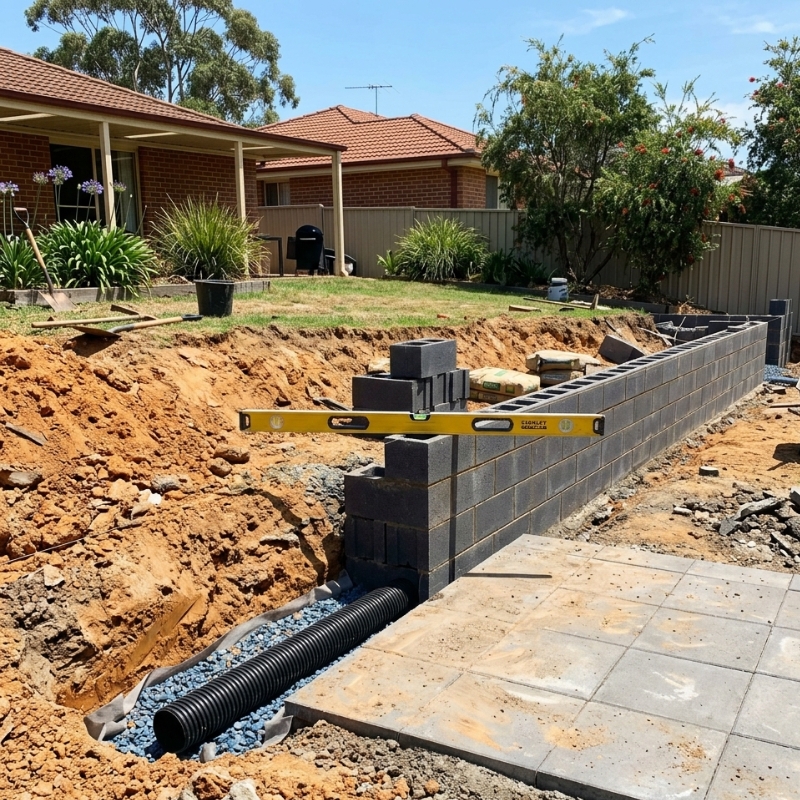
Turning a blank patch of ground into a lush outdoor haven should feel exciting, not nerve-racking. Yet many Sydney renovations end with drainage dramas, failing retaining walls or plants that curl up at the first summer heatwave—mistakes that are far pricier to fix than to prevent. Understanding the traps now will save you money, council headaches and weekend frustration later. This guide breaks down nine of the most common oversights we’ve seen across the Harbour City, explains why they happen, and shows how a quick dose of professional landscaping advice can keep your project on track without blowing the budget.
1. Ignoring Natural Drainage Patterns
Sydney’s clay-rich subsoils mean water rarely sinks straight down; it finds the path of least resistance—often towards your home or the neighbour’s fence.
Why It Happens
DIYers grade surfaces by eye, forgetting that even a two-degree fall can pool water in the wrong place.
Costly Consequences
- Soggy lawns that turn into mud each winter
- Rising damp inside older brick foundations
- Premature deck and fence rot
How to Avoid It
- Use a builder’s level or laser to set a 1:60 fall away from structures.
- Incorporate perforated agline pipe behind retaining walls.
- Finish hardscape surfaces slightly higher than adjacent garden beds to stop water from creeping onto pavers.
2. Planting Without Checking Mature Size
That cute 200-mm-pot magnolia at Bunnings will hit four metres tall—and wide—within a few Sydney summers.
Why It Happens
Smaller plants are cheaper and look harmless at purchase time.
Costly Consequences
- Heavy pruning bills or full removal when roots invade pipes
- Ongoing leaf litter clogging gutters and pool skimmers
- Blocking afternoon light into living rooms
How to Avoid It
- Read the “ultimate height and spread” on the label, not just the pot size.
- For tight terraces, favour naturally compact species like Waterhousia ‘Green Avenue’ or dwarf lilly pilly cultivars.
- Cross-check suggested setbacks with the NSW Planning Portal’s exempt development guide for boundary plantings.
3. Skipping Soil Testing and Preparation
Sydney block developers often leave just 100 mm of topsoil over hard clay. New homeowners plant straight into it—then wonder why nothing thrives.
Why It Happens
Soil looks “good enough” once turned over with a shovel.
Costly Consequences
- Stunted growth that requires replanting
• High water bills because compacted clay repels moisture
• Nutrient lock-up leading to yellowed foliage
How to Avoid It
- Conduct a simple jar test: shake one soil sample with water and let layers settle; more than 40 % clay means you need gypsum and organic matter.
- Dig in 150 mm of compost and river sand before laying turf.
- For vegetable beds, raise them at least 300 mm above the clay to escape it altogether.
4. Underestimating Hidden Services
Hit a power cable or gas line, and your weekend project turns into a safety emergency.
Why It Happens
Homeowners rely on old building plans or neighbours’ guesses.
Costly Consequences
- Expensive emergency repairs and possible fines
- Personal injury or property damage
- Project delays waiting for service providers to reinstate lines
How to Avoid It
- Hand-dig the final 300 mm near marked services instead of using an auger.
- Keep at least 600 mm clearance when positioning large footings or tree pits.
5. Overlooking Council Setbacks and Height Limits
Sydney’s 30 + local councils all have slightly different rules on decks, retaining walls and tree removal. What passes in Blacktown might attract a stop-work order in Woollahra.
Why It Happens
Assuming small structures don’t need permission.
Costly Consequences
- Demolition notices for non-compliant retaining walls
- Fines for removing protected species
- Delays in property sales due to unapproved works on Section 10.7 certificates
How to Avoid It
- Check your suburb’s Development Control Plan (DCP) online.
- Keep retaining walls under 600 mm and at least 900 mm from boundaries if you want exempt status.
- Photograph and file council correspondence for future buyers.
6. Choosing Incompatible Materials for the Micro-Climate
Western-facing courtyards can hit 50 °C on a February afternoon—bad news for soft sandstone pavers or ferny shade plants.
Why It Happens
Pinterest boards often feature European images that ignore Sydney’s intense UV and rainfall patterns.
Costly Consequences
- Rapid fading, cracking or spalling of stone
- Plants scorched or permanently wilted
- Early replacement costs
How to Avoid It
- In heat traps, specify dense stones like granite or porcelain that resist thermal shock.
- Position heat-sensitive plants on the southern side of built elements.
- Use mulch to buffer soil temperature swings and cut watering needs.
7. Neglecting Proper Base Compaction
Rushing paving or decking leads to movement, trip hazards and drainage failures.
Why It Happens
Skipping hired plate compactors seems like an easy saving.
Costly Consequences
- Uneven paths that pond water and grow slippery algae
- Cracking grout lines within a year
- Costs of relaying pavers or rebuilding structural footings
How to Avoid It
| Task | Shortcut Mistake | Proper Approach |
| Paving | Laying pavers on a 20 mm sand screed only | Compact 100 mm road-base in 50 mm layers, then screed sand |
| Decking | Joists on soil or bricks | Joists on adjustable stirrups bolted into concrete footings |
| Retaining wall | Sleepers directly on soil | Sleepers on 100 mm crushed-rock trench, compacted and level |
Spend an extra half-day compacting; it can buy you an extra decade of stability.
8. Forgetting Future Access and Maintenance
A new raised planter hard against the fence looks neat—until you need to paint the palings or fix storm-damaged panels.
Why It Happens
Design focuses on aesthetics, not life-cycle upkeep.
Costly Consequences
- Awkward, costly dismantling for repairs
- Plants suffering due to cramped maintenance space
- Reduced property appeal to future buyers who spot the oversight
How to Avoid It
- Leave 600 mm clearance along at least one fence line for access.
- Hinged bench lids can hide irrigation controls or pool filters.
- Run conduit sleeves before laying paving to add future lighting without pulling up pavers.
9. Treating Every Project as a DIY Save
There’s pride in rolling up your sleeves, but some tasks demand licenced expertise—especially where structure or warranty claims are involved.
Why It Happens
YouTube tutorials make tasks look simpler than they are.
Costly Consequences
- Voided home insurance where unlicensed work causes damage
- Rebuilding costs that dwarf initial professional quotes
- Safety hazards from mis-poured concrete or unstable blockwork
How to Avoid It
- Engage certified trades for retaining walls over 600 mm, electrical works, or pool fencing.
- For major hardscape layouts, read our advice on DIY paving mistakes to avoid before buying materials.
- Combine DIY planting with professional structural elements to balance cost and compliance.
FAQs
1. Are retaining walls under 600 mm always exempt from approval in Sydney?
Generally, freestanding walls under 600 mm high and set back the required distance from boundaries qualify as exempt development across most NSW councils. However, sites with flood overlays, heritage status or shared boundaries may need formal approval. Double-check your local DCP before starting.
2. How far should I plant a tree from my sewer line?
As a rule of thumb, the mature height of the tree equals its safe planting distance from pipes. If in doubt, select smaller, fibre-root species or install a root barrier sleeve between the planting hole and the pipe run.
3. What’s the minimum soil depth for healthy turf on Sydney clay?
Aim for at least 150 mm of well-amended topsoil. Less than 100 mm often leads to compaction and poor root penetration, especially under foot traffic.
4. How can I tell if my paver base is compacted enough?
Walk across the sub-base in sturdy boots. Your heel should leave no indentation. Alternatively, drop a 10 kg weight from knee height—movement indicates more compaction is needed.
5. Is it cheaper to DIY irrigation or hire a professional?
Kits make small systems straightforward, but complex layouts with multiple zones and pumps benefit from professional design. Incorrect pipe sizing or valve placement can waste water and require costly retrofits.
Final Thoughts
Landscaping isn’t just about today’s kerb appeal—it’s about how well your outdoor space ages with Sydney’s climate, soil quirks and council rules. By scratching beneath the surface (literally) before you dig, you’ll dodge the budget-blowing errors that keep renovators up at night. When projects involve structural loads, boundary lines or tricky clay soils, bringing in a seasoned landscaper for a quick design or compliance check is often the most affordable insurance you can buy. Plan smart now, and you’ll enjoy a resilient, low-stress garden for years to come.
)
&description=&image=https://a1gardeningsydney.com.au/wp-content/uploads/2026/06/Landscaping-Mistakes-That-Cost-Sydney-Homeowners-and-How-to-Avoid-Them-Before-You-Dig.jpg)