
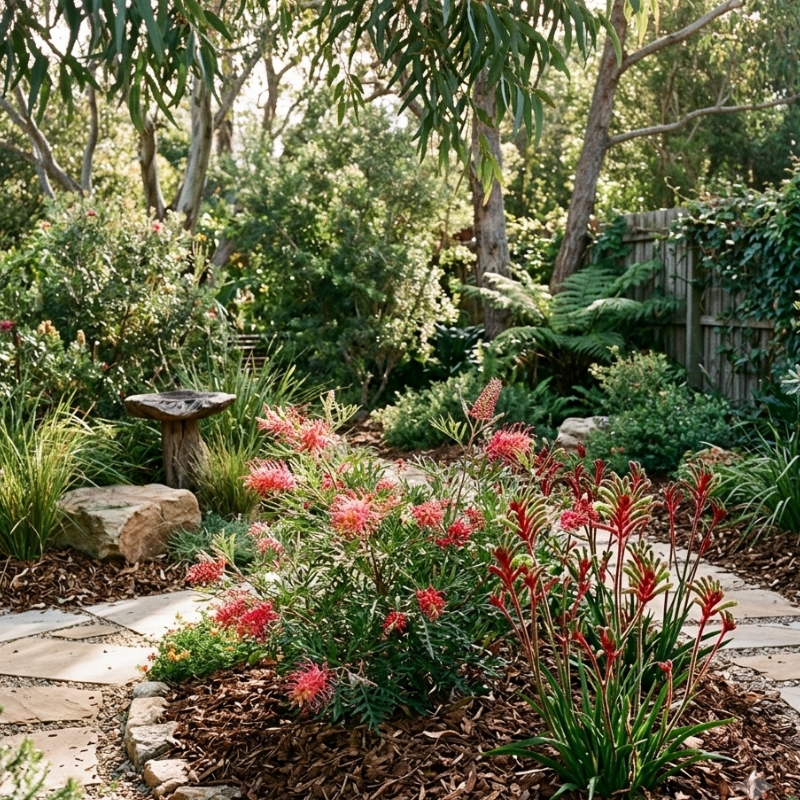
Sydney gardeners hear a lot about mulching, but advice often focuses on exotic ornamentals or lawn edges. Native Australian plants have evolved in lean soils and unique micro-climates, so the mulch you spread around grevilleas, banksias or kangaroo paws needs to reflect their needs, not just general horticultural rules. In this guide, we will break down the most popular organic options, depth guidelines, seasonal timing and local considerations so you can protect roots, lock in moisture and keep weeds down without smothering those delicate natives. If you ever decide the job is bigger than a weekend project, our professional mulching service is ready to help, but first let’s dive into the science and practicalities you can handle yourself.
Why Native Plants Deserve a Tailored Mulch Approach
Most Australian natives originate from nutrient-poor, free-draining soils. Blanket mulching recommendations that suit roses or citrus can backfire on a grevillea or waratah in two main ways:
- Excess nitrogen: Rich compost-heavy mulches can trigger rapid, weak growth and fewer flowers.
- Waterlogging: Dense mats of fine material can trap too much moisture, encouraging root rot or fungal problems in species that prefer dry crowns.
Sydney’s climate intensifies these risks because summer storms alternate with long dry spells, so moisture swings are common. Choosing a coarse, woody mulch that breaks down slowly often mirrors the natural leaf litter layer native plants evolved with, offering protection without nutrient overload.
Key Factors to Consider Before You Buy
1. Particle Size and Airflow
Coarse chips (20–50 mm) let air reach the soil surface while shading it. Fine particles can knit together and repel water, creating the opposite of what you intended.
2. Origin and Potential Allelopathy
Some tree species release natural chemicals that suppress germination. While this helps with weeds, it can also hinder shallow-rooted seedlings. Test small areas if you are unsure.
3. Colour and Heat Absorption
Dark mulches absorb more heat, which can stress delicate foliage in Western-facing beds. Lighter shades such as straw reflect sunlight and keep root zones cooler.
4. Wildlife and Insects
Sugar-rich mulches like lucerne attract worm activity quickly, improving aeration. Resinous pine bark is less attractive to worms but lasts longer, reducing top-ups.
Comparison Table: Popular Organic Mulches for Native Gardens
Below is a quick look at how five commonly sold mulches stack up for Sydney’s native plantings.
| Mulch Type | Best Suited To | Key Benefits | Possible Drawbacks | Top-Up Frequency |
| Eucalypt chip | Shrubs & trees needing low nutrients | Local availability, natural oils deter some pests | Fresh chips can tie up nitrogen temporarily | Every 18–24 months |
| Tea-tree mulch | Banksias, grevilleas, groundcovers | Excellent weed suppression, pleasant earthy scent | Dark colour absorbs heat, not ideal for hot western spots | Every 18–24 months |
| Pine bark nuggets | Feature beds, slope gardens | Long-lasting, slow to decompose, good erosion control | Can blow away if pieces are too light | Every 2–3 years |
| Sugar cane straw | Quick soil cooling around new plantings | Rapid moisture retention breaks down into humus | Needs topping up often, may harbour mould if spread too thick | Twice a year |
| Leaf litter blend | Under mature gums or angophoras | Mimics natural forest floor, encourages fungi networks | Variable chunk size, may include sticks needing raking | Annually after windy seasons |
Coarse eucalypt or tea-tree mulches hit the sweet spot for many suburban native beds because they deliver weed control without creating a soggy mat. If you love the straw look, keep it thin and refresh more frequently.
How Deep Should the Layer Be?
• Established shrubs and trees: 50–75 mm is usually enough.
• Young tube-stock or cutting-grown natives: 25–40 mm to avoid crown rot.
• Around trunk flare: leave a 50 mm gap so moist mulch does not sit against bark.
Tip: Sydney’s sandy pockets, especially near coastal suburbs, lose moisture fast, so err toward the higher end of those depth ranges there. Clay belts in the Inner West or Hawkesbury retain water longer, so stay conservative.
When Is the Best Time to Mulch in Sydney?
Autumn and early winter are ideal. The soil is still warm, rainfall increases, and weeds have not yet sprinted into spring growth. Spreading mulch then locks in residual summer moisture and means you refresh less often. Summer top-ups can still work, but lay mulch after a thorough watering so trapped heat does not cook dry roots.
Common Mulching Mistakes to Avoid
- “Volcano” piling against trunks. This traps moisture and invites borers.
- Spreading weed-laden grass clippings straight from the mower. Seeds germinate happily under the cosy layer.
- Over-fertilising and then adding high-nitrogen mulches such as lucerne causes chemical burn or rank growth.
- Ignoring existing irrigation lines. Coarse chips can block dripper outlets—lift and relay hoses first.
- Forgetting soil wetting agent in hydrophobic sands. Water will bead off even the best mulch if the substrate is water-repellent.
Quick Checklist Before You Head to the Landscape Yard
• Measure bed area so you order the right volume—mulch is sold by cubic metre.
• Check whether your council offers discounted local green-waste mulch.
• Ask if the supplier screens for metal or plastic contamination.
• Inspect moisture content; overly wet piles can smell sour (a sign of anaerobic fermentation).
• Plan a clear tipping spot within 5–10 m of the garden, saving wheelbarrow trips.
For more seasonal garden maintenance tips, our article on how mulch can protect plants in winter months explains how mulching supports healthier gardens by improving soil conditions and protecting plant roots during winter.
Monitoring Mulch Over Time
Mulch breaks down faster in Sydney’s humid summers. Once it reaches half its original thickness or you see bare soil patches, rake the surface lightly to loosen crusts and add a fresh layer. If fungus appears, remember most mycelium is beneficial and indicates healthy decomposition.
What If Native Plants Still Struggle After Mulching?
Mulch is only one part of plant health. Check:
• Drainage—water pooling can suffocate roots.
• Sunlight—many bank on full sun and fade in dense shade.
• pH levels—natives often prefer slightly acidic soils (pH 5.5–6.5).
• Root competition—large trees may out-compete under-storey plantings.
If problems persist, consult a local nursery specialising in natives or refer to the NSW Government guide on mulching for deeper soil amendment advice tailored to Australian conditions.
FAQs
1. Can I use cypress mulch around native plants?
Cypress is aromatic, termite-resistant and long-lasting, but it often contains higher oil levels than eucalypt or pine. Thin layers (no more than 50 mm) are generally safe, yet always water well before and after application to prevent hydrophobic issues.
2. Will mulching attract pests like termites?
Coarse mulch made from hardwood chips is less attractive than soft, moist pine or paper-based mulches. Keep mulch away from the house slab and consult a pest professional if you have an active termite zone.
3. How often should I replace sugar cane mulch?
Because it breaks down within six months, plan to refresh sugar cane mulch twice a year—early winter and early summer—so soil stays covered year-round.
4. Do native groundcovers need mulch?
Yes, a thin layer helps suppress weeds until the groundcover fills in. Once foliage forms a dense mat you can let mulch decompose naturally underneath.
5. Is dyed mulch safe for wildlife?
Most reputable suppliers use non-toxic, water-based dyes, but bright colours absorb more heat. Stick to natural chips if you are planting wildlife corridors or frog-friendly ponds.
Final Thoughts
A suitable organic mulch acts like a protective doona for your native garden beds, moderating temperature swings, reducing weed pressure and slowly improving soil texture. Choose a coarse, low-nutrient material such as eucalypt or tea-tree chips, spread it at the right depth and time of year, and keep an eye on breakdown rates. If you notice recurring issues—or simply want to save Saturday morning for a coastal walk—professional support is only a call away. Until then, happy mulching and enjoy watching those banksias burst into bloom.

