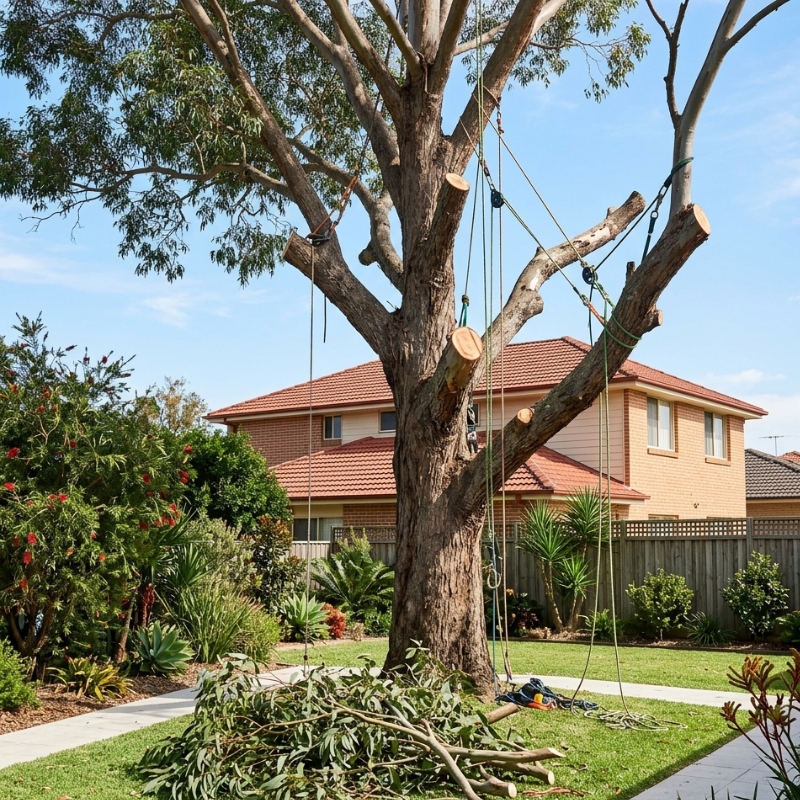
A mature tree is one of the best features a Sydney property can have: summer shade, privacy, birdlife, and street appeal that adds real value. But the same size that makes a big tree beautiful makes it dangerous when it’s neglected. Dead limbs, storm damage, and overgrown canopies can fail without warning, and Sydney’s storm season has a habit of finding every weak branch. Professional tree loppers in Sydney, done well keeps a tree safe, healthy, and in good shape; done badly, it can injure people, damage property, breach council rules, and leave you with a weaker tree than you started with. Here are five safe tree lopping practices every Sydney homeowner should know before anyone picks up a chainsaw.
1. Check local council rules before cutting
In NSW, you can’t always do as you please with a tree just because it’s on your land. Most councils protect trees over a certain size, along with native, significant, and heritage species, through tree preservation controls in their local planning rules. That often means you need council approval before pruning heavily or removing a tree, and unauthorised work can attract substantial fines.
Because the rules differ from one council to the next, the safe first step is to check your local council’s requirements before any cutting starts, the NSW Government’s guidance on removing trees on your property is a good place to begin. Some jobs need a permit or an arborist’s report; others fall under exemptions for dead, dangerous, or small trees. A reputable tree service will know the local process and can help you stay compliant rather than discovering the rules after the fact.
2. Inspect tree health for disease and rot
Before any work is planned, the tree itself needs a proper look. Its condition changes what should be done , and sometimes whether it should be climbed or loaded at all. Warning signs of disease or decay include fungal brackets or mushrooms at the base or on the trunk, hollows and cavities, soft or crumbling wood, large areas of deadwood in the canopy, cracks in the trunk or major branch forks, peeling bark, and a sudden lean with soil lifting near the roots.
These aren’t just cosmetic. A tree with internal rot or a structural defect can behave unpredictably under load, which is exactly when tree work goes wrong. If you spot these signs, don’t climb or cut; have a qualified arborist assess the tree first and advise whether it needs careful pruning, partial reduction, or full removal. Catching problems early helps in another way too: done correctly, lopping branches can limit pests and disease before they spread through the canopy.
3. Use qualified arborists with insurance
Tree work is genuinely high-risk: heights, chainsaws, heavy falling limbs, and overhead power lines all in one job. This is not the place to save money with an unqualified operator or to attempt a big job yourself.
Use trained tree workers or arborists who hold current qualifications and the right insurance, public liability cover and workers’ compensation at a minimum. If something is damaged or someone is hurt and the operator isn’t insured, the exposure can fall on you. Ask for proof of insurance, a written scope of work, and a clear plan for controlled lowering of limbs near structures. Work near the electricity network needs appropriate clearances and accreditation, so make sure that’s covered before anyone starts.
4. Follow Australian Standard AS 4373 for pruning
There is a right way to cut a tree, and it’s written down. AS 4373 Pruning of Amenity Trees is the national standard that sets out how pruning should be carried out, where cuts are made (just outside the branch collar, so the wound seals properly), how much of the canopy can safely be removed, and which practices to avoid.
This is what separates safe tree lopping from damaging hacking. Heavy “topping” or indiscriminate lopping might look tidy for a season, but it triggers weak, poorly attached regrowth and opens large wounds to decay, leaving a more hazardous tree down the track. Reputable operators adhere to AS 4373, and it’s fair to ask whether the work on your tree will follow it.
5. Manage waste responsibly
A single job can generate a surprising volume of branches, logs, and leaf litter. Responsible disposal is part of a safe, professional result. Clean green waste can be chipped into mulch and reused on your own garden beds, or removed and recycled rather than dumped illegally. Diseased or pest-affected material should be separated and dealt with promptly so it doesn’t spread problems to other plants, and tools should be cleaned between trees for the same reason.
A good tree service includes cleanup and disposal in the job, so you’re left with a tidy, safe yard rather than a pile of debris to deal with yourself.
What to ask before you sign off on the work
Safe tree lopping comes down to preparation and the right people: know your council’s rules, check the tree’s condition, hire insured and qualified professionals, insist on AS 4373 pruning, and dispose of the waste responsibly. Get those five right, and you protect your family, your property, and the tree itself. Ask for the certificate of currency, the qualification and the council position in writing before anyone climbs. A1’s tree loppers in Sydney provide all three as a matter of course.

