

When it comes to choosing outdoor materials, you’re rarely short on options — but that doesn’t mean the decision is easy. If you’re eyeing something timeless and natural, travertine paving probably sits high on your list. Its rustic charm, temperature resistance, and non-slip texture make it a staple in Aussie backyards. Yet, like any material, it’s not without its quirks. Whether you’re redesigning a pool surround or updating a patio, it pays to understand what you’re working with before laying the first stone.
This article unpacks the most common concerns about travertine paving — from durability doubts to climate resilience. You’ll get a clear view of the issues some folks face, where it shines, and when it needs backup, like sealing or professional installation. If you’re weighing up whether travertine suits your landscaping vision, you’re in the right spot.
What are common issues with outdoor stone paving?
Even the best-looking paving jobs can go pear-shaped if common concerns aren’t addressed upfront. Natural stone, while durable, isn’t foolproof.
- Uneven ground shifts can cause stone to crack or loosen — Soil movement undermines base stability and joint integrity.
- Poor drainage leads to water pooling and moss buildup — Standing water encourages slippery surfaces and structural erosion.
- Cheap adhesives may fail during temperature swings — Weak bonding can break down with seasonal freeze-thaw cycles.
- An incorrect slope means water flows back toward your house — Bad grading risks internal leaks and foundation problems.
Cracking in colder regions and surface staining from soil run-off are two of the most reported issues. Skimping on preparation or hiring a dodgy installer often makes things worse. You’ve got to start with a solid foundation and a drainage plan that works, or you’ll quickly discover why improper DIY paving can cause drainage issues. Understanding these setbacks early helps you avoid repeat fixes and long-term regrets.
Why do homeowners worry about surface durability?
No one wants their new patio looking worse for wear after one season. With stone paving, surface durability is one of the primary concerns.
- Heavy foot traffic wears down softer stones faster
- BBQ spills and oil leaks can stain porous surfaces
- Frost and hail may chip edges if the stone lacks flexibility
- Dragging furniture creates long-term etching on polished finishes
Many choose travertine, thinking it’s bulletproof. While it’s more resilient than sandstone, it still needs thoughtful use. You’ll get better longevity when it’s sealed and cleaned regularly, especially in entertaining areas. Without those steps, even premium finishes can go crook.

What problems can arise with travertine paving?
Travertine’s reputation as a premium material is well-earned — but it’s not without its hiccups. Like other limestones, it’s porous and somewhat brittle if mishandled.
- Pitting in the surface can trap dirt and moisture
- Hollow tiles may echo or break under pressure
- White efflorescence forms if the base isn’t sealed
- Tiles may shift if the adhesive or bedding is poor
A big culprit behind these headaches is installation shortcuts. Handling common travertine installation issues starts with picking the right grade and finish for your space — and having a crew that knows their stuff. Another common issue? People are using the wrong filler or grout, and that undermines the goal of creating outdoor spaces designed for lasting sustainability. That’s where most failures creep in.
How does travertine paving handle Australian weather?
The Aussie climate throws a mixed bag — scorching summers, flash rains, and the odd frost. Travertine holds up surprisingly well, but it has limits.
- Lighter colours reflect heat, keeping footpaths cooler
- Textured finishes offer traction around wet areas
- Water absorption helps regulate heat, reducing cracking
- Freeze-thaw cycles can cause microfractures if water is trapped
Outdoor flooring ideas with travertine patterns are often chosen for pool areas because the stone stays cool underfoot. However, in spots that cop heavy rain, you’ll want proper sealing to avoid saturation. Still, for most Aussie gardens, travertine’s natural cooling ability makes it a top pick and works beautifully with creative paving patterns to make small gardens look bigger.
| Weather Factor | Travertine Reaction | Recommended Fix |
| UV exposure | Fades over time | Use sealers with UV block |
| Rain & Stormwater | Can cause erosion | Install drainage channels |
| Coastal wind | Salt buildup stains | Clean with a pH-neutral wash |
| Freezing temperature | Causes cracks in gaps | Use non-porous sealers |
What makes travertine paving a natural and elegant option?
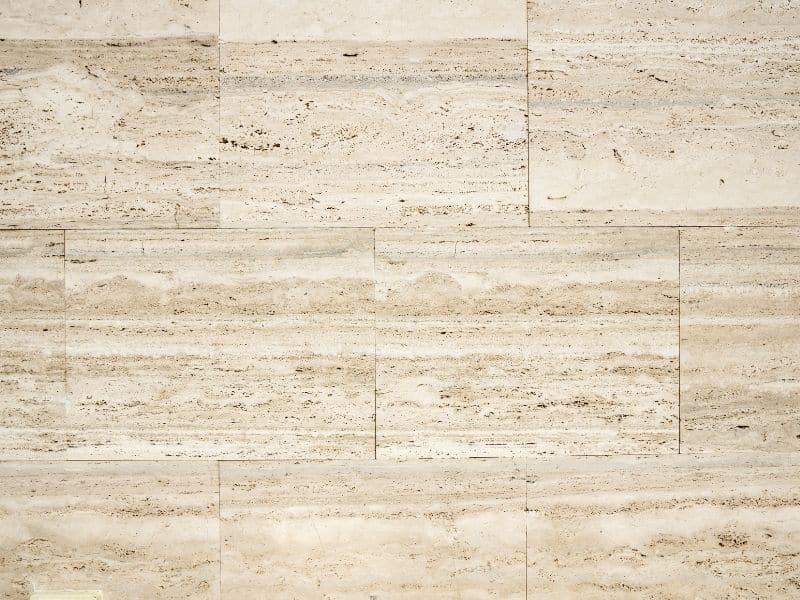
When done right, travertine transforms a bland yard into a high-end retreat. Its natural textures, variation in tone, and rustic feel help it blend with gardens, decks, or pool zones.
- Available in honed, tumbled, or brushed finishes for different slip ratings and visual textures
- Shades range from ivory to walnut to silver with subtle shifts that suit most outdoor palettes
- Consistent veining adds natural charm while hiding minor dirt, marks, or weathering over time
- Textured surfaces reduce slipping, even when wet, making it perfect for pools or rainy areas
One of its greatest strengths is how well it pairs with timber, sandstone, or concrete elements. If you’re after the benefits of using natural travertine stone outdoors, it’s hard to top its ability to balance visual appeal with safety. Travertine also offers a high-end look without screaming for attention. It’s elegant without being showy — a real Aussie classic. Low glare and soft textures mean it doesn’t steal the show from your landscaping, making it an excellent choice for those who consider high-quality paving solutions that elevate outdoor living spaces.
Is sealing travertine essential for long-term results?
In short: yes. Travertine’s porous surface acts like a sponge if left untreated. Sealing stops stains, improves longevity, and helps colours stay vibrant.
- Penetrating sealers block oil, dirt, and tannins
- Enhancing sealers deepens colour and adds sheen
- Sealers reduce mould and algae growth
- Reapplication is needed every 1–2 years, depending on use
If you’re serious about keeping things schmick, sealing isn’t optional. From BBQ spills to leaf stains, sealers save you elbow grease down the line. Plus, it’s a key part of sealing tips for travertine paving installations, especially in shady or wet zones. A neglected sealing job can undo thousands spent on premium stone — so it’s worth doing right the first time.
Final thoughts on using travertine paving for landscaping
Choosing the right material comes down to more than looks — it’s about function, longevity, and how it behaves under pressure. Travertine ticks a lot of boxes: cool underfoot, slip-resistant, visually appealing, and flexible across applications. You’ll still need to address known issues like pitting, weather sealing, and grout choice. But those are manageable with good prep and the right team.
If you’re unsure where to start, see how A1 Gardening & Landscaping Sydney makes maintaining and enhancing outdoor areas effortless.

